A luxury horseback Andes crossing is not a simple riding excursion. It is an expedition with history under its hooves. It follows the spirit of one of South America’s most extraordinary military and geographic feats: the 1817 Crossing of the Andes, led by General José de San Martín and the Army of the Andes during the struggle for independence. Today, travelers can experience versions of this legendary route on horseback, moving through high mountain passes, remote valleys, glacial landscapes, and the silence of the cordillera with expert guides, camp logistics, and the kind of hospitality that makes a demanding journey feel deeply cared for. Argentina’s official tourism site describes the experience as following San Martín and his soldiers’ trail through the Andes, in landscapes that remain vast and unforgettable.
For foreign travelers considering this crossing, the first thing to understand is that this is not a decorative “horseback ride with a mountain view.” It is a true Andean journey. Depending on the selected route, it may last from six to nine days, with several full riding days across valleys, rivers, high passes, and mountain camps. Some itineraries follow routes inspired by San Martín’s historic crossing through Mendoza or San Juan, while others focus on particular passes, such as Portillo Argentino, Portillo Medio, or Paso de Los Patos. The historical Paso de Los Patos, in San Juan, was one of the key routes used by the Army of the Andes in 1817, with the highest point of the expedition reaching around 4,476 meters at the Cuesta del Espinacito.
The appeal is obvious: few experiences combine history, wilderness, riding, and comfort with this much force. But the experience needs to be chosen carefully. The Andes are beautiful, yes. They are also serious.
Why This Crossing Is So Different From a Normal Horseback Ride
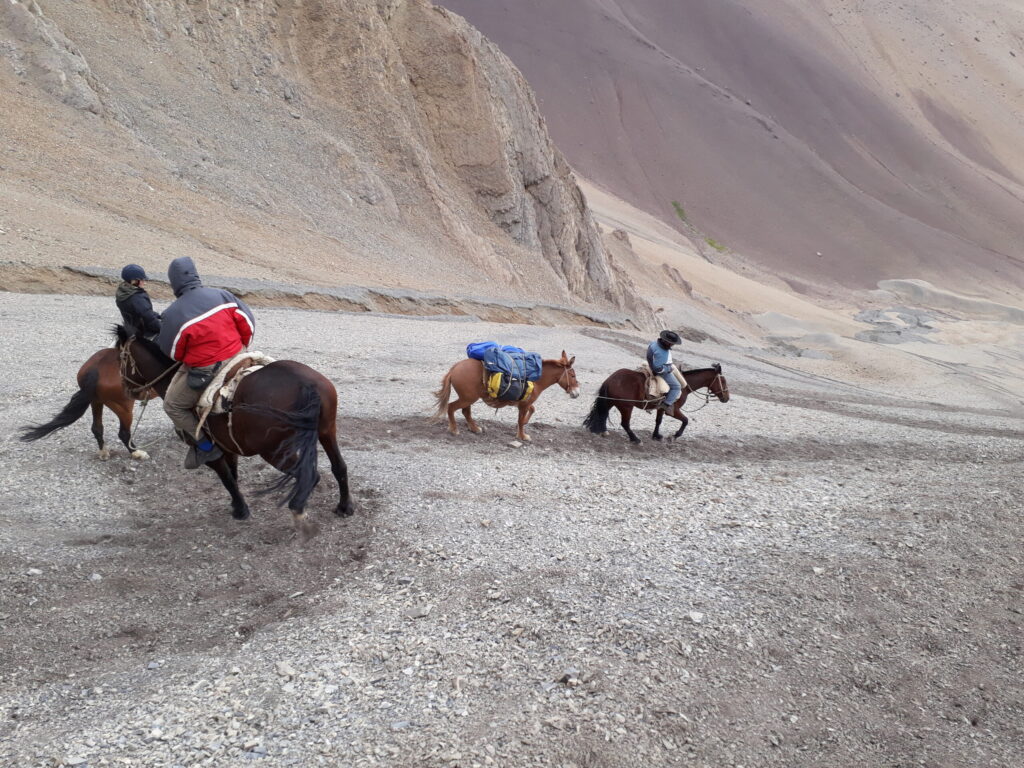
Most travelers who ride on vacation are used to half-day trail rides, vineyard rides, beach rides, or estancia outings. The San Martín-style Andes crossing belongs to another category. It is slower, deeper, and more elemental.
You ride for hours each day. You cross rivers. You move through valleys where there is no town, no road, and sometimes no sign of modern life beyond the expedition itself. The horses are not props; they are partners. The local guides and muleteers are not just staff; they are the people who understand the mountain, the animals, the weather, and the rhythm of the terrain.
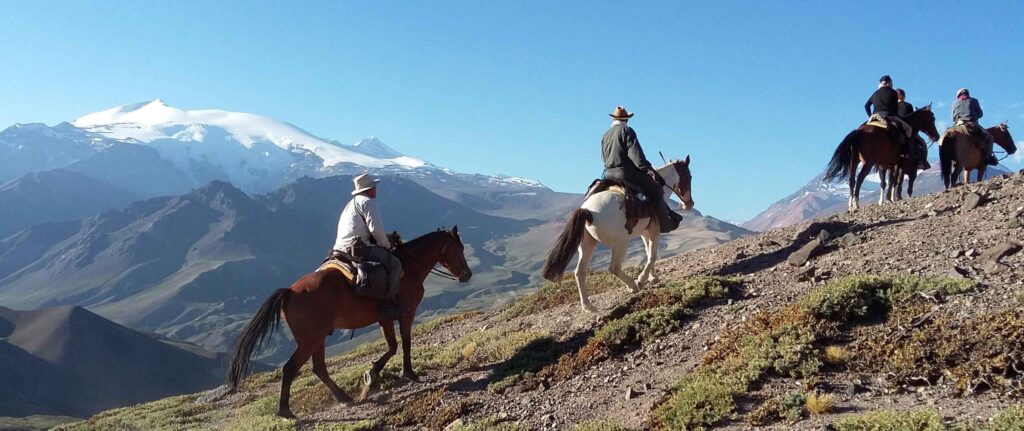
On some routes, travelers may pass through landscapes of dramatic altitude, including high mountain passes above 4,000 meters. One Mendoza-based crossing, for example, describes crossing Portillo Argentino at 4,380 meters while traversing from Argentina toward Chile. Another itinerary mentions Portillo Medio at 4,030 meters, with riding days across valleys, rivers, pampas, and glaciers.
This altitude matters. It changes the air, the temperature, the level of physical demand, and the way the days need to be planned. A well-run high-end crossing does not simply “add luxury” on top of the mountain. It designs the entire operation around safety, pacing, comfort, and local expertise.
Exclusive Equestrian Travel Argentina: Who Is This For?
Exclusive equestrian travel Argentina attracts several types of travelers. Some are experienced riders who want a once-in-a-lifetime expedition. Others are adventurous couples, families with older children, or groups of friends who want something more meaningful than a standard Patagonia or Mendoza itinerary. Some come for the San Martín history. Some come for the horses. Some come because the Andes have a strange magnetic pull and they want to cross them the old way.
You do not always need to be an expert rider, but you should be honest about your riding level. Some operators classify certain crossings as low to intermediate riding skill, while others are more demanding due to length, terrain, altitude, or weather exposure. One Argentina-to-Chile horseback crossing from Mendoza lists a six-day duration and a low-to-intermediate skill level, which gives a sense of how accessible some versions can be when properly guided.
That said, “accessible” does not mean effortless. Travelers should be comfortable spending several hours in the saddle, following instructions, adapting to changing conditions, and being away from normal hotel infrastructure. This is not the right experience for someone who wants everything polished to city standards. It is ideal for someone who understands that, in the mountains, true luxury often means warmth, safety, space, silence, strong logistics, and a glass of Malbec under a sky violently full of stars.
Glamping Andes Mountains: What Comfort Looks Like on the Route
The phrase glamping Andes mountains should be understood with the right expectations. This is not a resort hidden in the cordillera with marble bathrooms and room service. The beauty of a catered Andes crossing is that it brings comfort into a remote environment without trying to erase the remoteness.
Depending on the program, nights may be spent in mountain camps, equipped tents, refuges, or estancia-style stops before or after the main crossing. A high-end version may include quality sleeping gear, dining tents, camp furniture, warm meals, good wines, attentive staff, and mule-supported logistics so travelers do not need to carry expedition loads themselves.
The meals are often one of the great surprises. In the right hands, the mountain kitchen becomes part of the experience: stews, grilled meats, fresh bread, regional wines, strong coffee, and, when conditions allow, an asado that tastes better because of where it is served. After a day of riding through the Andes, even simple food becomes memorable. The luxury is not in complication. It is in being taken care of where care is difficult.
A fully catered crossing also means the invisible work is handled: horses, saddles, pack animals, camp setup, route planning, meals, safety protocols, border logistics if crossing into Chile, and contingency plans if weather changes. For a foreign traveler, this is essential. The Andes should feel wild, but the operation behind the scenes should be anything but improvised.
Guided Horseback Riding VIP: The Importance of Local Guides
A guided horseback riding VIP experience in the Andes depends almost entirely on the quality of the people leading it. The terrain is not forgiving, and the best guides are part horse expert, part mountain reader, part historian, part host, and part quiet magician of logistics.
Local baqueanos and muleteers understand details that cannot be learned from a brochure. They know how the animals behave on different terrain, where to cross water safely, when the wind is turning, which slopes become tricky, and how to adjust the pace for the group. For travelers, especially those coming from abroad, this knowledge is the difference between a trip that feels adventurous and one that feels risky.
The historical layer also matters. Following a San Martín-inspired route is not just about scenery. It is about moving through a landscape that once tested an army. The 1817 crossing was a strategic, physical, and logistical achievement of enormous scale. Experiencing even a small part of that geography on horseback gives travelers a more visceral understanding of what the campaign required.
This is where the guide can transform the journey. A good guide does not recite history like a museum plaque. They place it in the landscape. They show you why a pass mattered, why a valley was difficult, why mules were essential, why weather could change everything. Suddenly, the route stops being an “activity” and becomes a story you are riding through.
When to Go and What to Expect From the Weather
Most horseback crossings of the high Andes operate in the warmer months, generally from November to March. One Mendoza-based operator lists November to March as the season for its Andes crossing tour, which aligns with the general logic of high-mountain accessibility in this region.
Even in summer, conditions can vary. Days may be sunny and dry, but nights can be cold. Wind is common. Weather can change quickly at altitude. Travelers should pack carefully and avoid assuming that “Argentina in summer” means warm weather everywhere. In the Andes, layers are your best friends, and cotton is usually the villain in disguise.
The best prepared travelers bring riding clothes, thermal layers, sun protection, gloves, waterproof outerwear, broken-in boots, and a good attitude toward dust. They also understand that the exact route may be adjusted for safety. In the mountains, flexibility is not a weakness in the itinerary. It is part of the intelligence of the trip.
How to Include the Crossing in a Larger Argentina Trip
A horseback crossing of the Andes pairs naturally with Mendoza, San Juan, or a broader wine and mountain itinerary. Many travelers begin with a few nights in Mendoza to recover from international travel, enjoy wineries, and acclimatize to the region before heading into the mountains.
For a polished itinerary, you might start with Buenos Aires for culture and arrival logistics, continue to Mendoza for wine and countryside, then dedicate the central chapter to the Andes crossing. Afterward, travelers may want a few softer nights to decompress: a vineyard lodge, spa property, or elegant estancia before flying home or continuing to Patagonia.
This is important because the crossing itself is not a “restful” experience in the normal sense. It can be emotionally restorative, yes. It can be majestic, silent, and deeply grounding. But it is still physical. Ending with comfort, wine, and unhurried meals is often the perfect counterweight.
Final Thoughts: The Andes, the Old Way
A high-end San Martín Route horseback crossing is not about adding extravagance to the mountains. The Andes do not need decoration. They need respect.
The best version of this journey gives travelers access to something rare: the chance to cross monumental terrain slowly, on horseback, with the guidance of people who know it intimately. It is history, wilderness, effort, hospitality, and silence braided into one experience.
You ride through valleys that make ordinary life feel very far away. You sleep beneath a sky that does not feel suburban or polite. You wake up cold, drink hot coffee, trust your horse, and keep moving. Somewhere along the way, the idea of “luxury” changes shape. It becomes less about softness and more about depth.
Warm food in a remote camp. A sure-footed horse. A guide who knows when to stop. A route with meaning. A mountain pass crossed not quickly, but properly.
For the right traveler, this is not just one more adventure in Argentina.
It is the kind of journey that stays in the body long after the dust has left your boots.
Frequently Asked Questions
Do I need to be an experienced rider to do a luxury horseback Andes crossing?
Not always, but you should be comfortable on horseback and honest about your level. Some Andes crossings are suitable for low-to-intermediate riders when guided properly, while others are more demanding due to altitude, terrain, and long riding days. A private or bespoke program can help match the route to the group’s ability.
When is the best time of year for the San Martín Route horseback crossing?
Most high Andes horseback crossings operate during the warmer months, usually from November to March. This is when the mountain passes are generally more accessible and conditions are better for multi-day riding. Even then, travelers should expect cold nights, wind, and changing weather.
What kind of accommodation should I expect?
Accommodation depends on the route and operator. Travelers may sleep in mountain camps, quality expedition tents, refuges, or estancia-style properties before and after the crossing. In a high-end version, the focus is on comfort within a remote setting: good camp logistics, warm meals, proper gear, and attentive service.
Can the Andes crossing be fully catered?
Yes. A fully catered crossing can include guides, horses, pack animals, camp setup, meals, wines, safety logistics, and transfers. This is strongly recommended for foreign travelers, because the success of the experience depends on expert planning and local mountain knowledge.
Can this experience be combined with Mendoza wine country?
Absolutely. Mendoza is one of the best places to combine with a horseback Andes crossing. Many travelers enjoy a few nights of wineries, spa time, and mountain-view lodges before or after the expedition. It creates a beautiful balance between adventure and comfort.
![Nibepo Aike - [Tailored Argentina]](https://tailoredargentina.com/wp-content/uploads/2026/06/Nibepo-Aike-Tailored-Argentina.png)