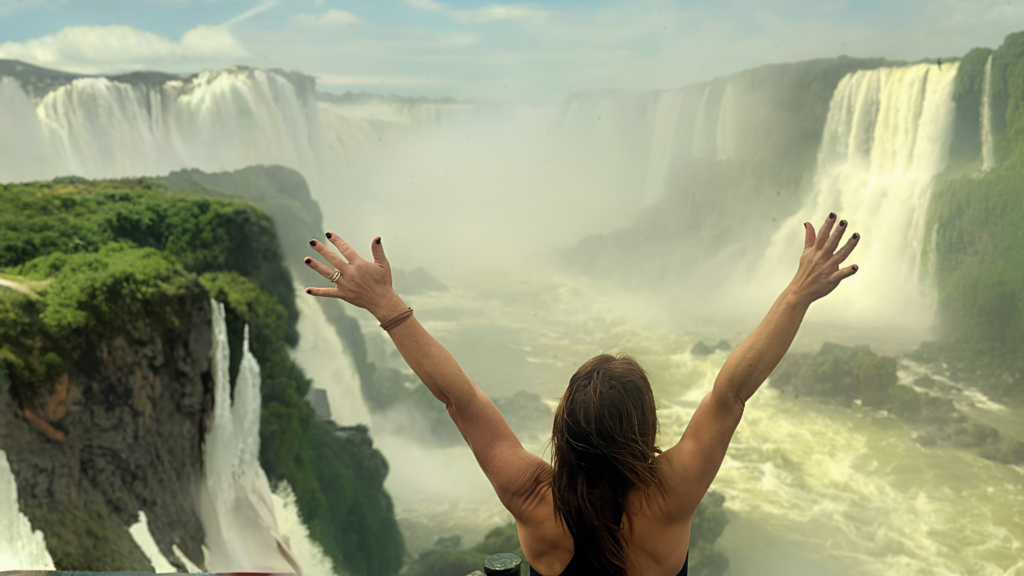
Iguazú is not a place you simply “stop by.” It is loud, green, humid, alive, and completely unreasonable in the best possible way. The falls do not sit politely in the landscape. They roar through it, split it open, soak the air, shake the walkways, and remind you very quickly that nature can still make humans go quiet.
For many travelers visiting Argentina, Iguazú Falls Argentina is one of the great contrasts of the trip. After the elegance of Buenos Aires, the vineyards of Mendoza, the desert colors of Salta and Jujuy, or the wide-open drama of Patagonia, Iguazú feels like entering a different country altogether. The air is warmer, the vegetation is thicker, the wildlife is bolder, and the rhythm slows down into something more tropical.
The Argentine side of Iguazú is the most immersive way to experience the falls. It is not just one viewpoint and a photo. It is a full day of trails, platforms, jungle paths, butterflies, mist, river views, and moments where the water seems to be falling from every direction at once.
This guide is designed to help you understand how to visit Iguazú well: how many days to stay, whether to include the Brazilian side, where to sleep, which excursions are worth it, what to know about the jungle, and how to fit Iguazú into a larger Argentina itinerary without turning your trip into a logistical puzzle.
1. Why Visit Iguazú Falls Argentina
Iguazú Falls is one of the most powerful natural sights in South America, shared by Argentina and Brazil and surrounded by subtropical rainforest. But when people talk about spending real time at the falls, they are often talking about Iguazú Falls Argentina.
The Argentine side allows you to walk through the national park and experience the falls from several angles. You are not only looking at the waterfalls from across the river. You are moving around them, above them, near them, and sometimes close enough to feel the spray on your face.
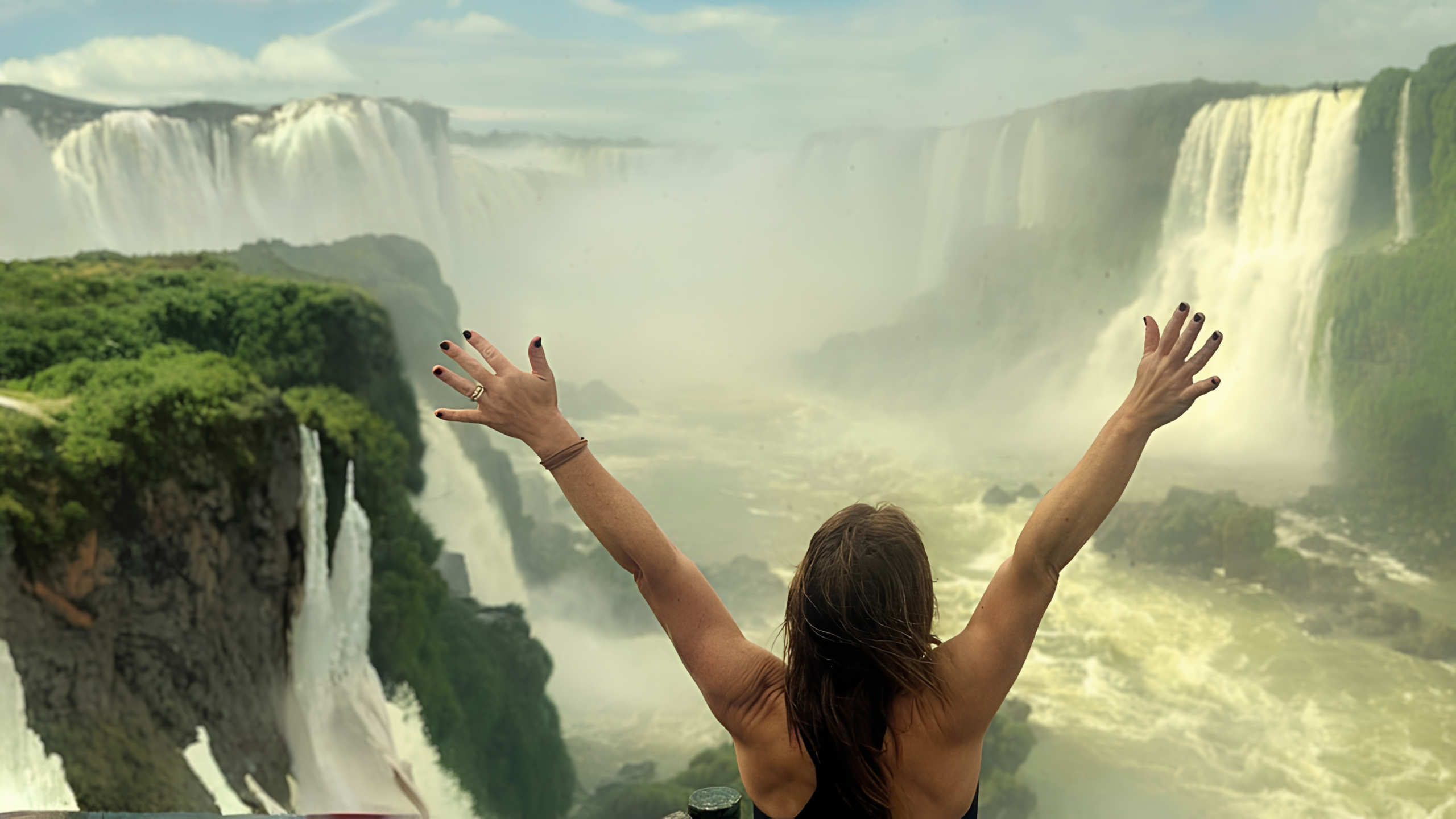
That is what makes the visit so memorable. You start with small glimpses through the trees, then the sound grows, then suddenly a wall of water appears in front of you. Some viewpoints feel cinematic. Others feel intimate. At certain platforms, you can stand almost at the edge of the falls and watch the river disappear below.
The Argentine side also gives you the famous Garganta del Diablo, or Devil’s Throat, the most dramatic section of Iguazú. It is the kind of place where conversation naturally fades. Not because there is nothing to say, but because the falls have taken over the room.
For travelers who enjoy nature but do not necessarily want strenuous trekking, Iguazú works beautifully. The main walkways are accessible, the experiences can be adapted to different travel styles, and a good guide can make the day feel rich without making it feel rushed.
2. Argentina Side vs Brazil Side: What’s the Difference?
The easiest way to understand the difference is this: the Argentine side is immersive, while the Brazilian side is panoramic.
On the Argentine side, you spend more time walking. There are several circuits, different platforms, jungle paths, and a much deeper feeling of being inside the park. You see different parts of the falls from above, below, and across the river. It is usually the longer and more complete visit.
The Brazilian side, by contrast, is shorter but visually spectacular. It gives you the grand postcard view. From Brazil, you can appreciate the full scale of Iguazú in a way that is harder to understand from inside the Argentine park. It is the wide-angle moment. The “now I understand how big this is” moment.
For most travelers, the best answer is not Argentina or Brazil. It is both.
If you have the time, visit the Argentine side first for the full experience, then the Brazilian side for perspective. The two sides complement each other beautifully. Argentina gives you the emotion of walking through the falls. Brazil gives you the portrait.
There are also different excursions on each side, including boat rides, helicopter flights from Brazil, Parque das Aves, and other regional experiences. So while the falls are the main reason to travel here, Iguazú can easily become a two or three-night stay with real variety, not just a quick box to check.
3. How Many Days Do You Need in Iguazú Falls Argentina?
For most luxury travelers visiting Iguazú Falls Argentina, two nights is the minimum that feels comfortable. Three nights is better if you want to slow the pace, include both sides, enjoy your hotel, and avoid feeling like you are being marched through the jungle with a clipboard.
A classic two-night stay might look like this:
Arrive on day one, settle in, maybe enjoy the hotel or do a light activity depending on flight times. Spend day two visiting the Argentine side of the falls, including the main circuits and Garganta del Diablo. On day three, visit the Brazilian side before flying out, if schedules allow.
A three-night stay gives the trip more air. You can dedicate one day to the Argentine side, one day to the Brazilian side with Parque das Aves or a boat experience, and still have time for the pool, spa, sunset drinks, or simply doing nothing for a few hours, which is an underrated travel skill.
If you are staying at one of the iconic hotels inside the national parks, such as Meliá Iguazú on the Argentine side or Belmond Hotel das Cataratas on the Brazilian side, extra time becomes even more valuable. These properties are not just places to sleep. They are part of the experience.
For travelers building a larger Argentina itinerary, Iguazú works very well as a two or three-night chapter. It gives the journey a completely different texture, especially when combined with Buenos Aires, Mendoza, Salta and Jujuy, or Patagonia.
4. The Main Trails and Walkways on the Argentine Side
The Argentine side of Iguazú is organized around several circuits, each offering a different relationship with the falls. This is where having a good guide makes a difference, not because the park is impossible to navigate alone, but because the day flows better when someone knows how to pace it.
The Upper Circuit gives you views from above the falls. It is a wonderful introduction because you start to understand how wide and layered the system is. You see the water before it drops, the islands, the jungle, and the river’s movement before everything turns into mist and thunder.
The Lower Circuit brings you closer to the base of the falls. This is often where the experience becomes more physical and emotional. You feel the humidity more, hear the roar more strongly, and see the falls from angles that make them feel taller and more alive.
Then there is Garganta del Diablo, the Devil’s Throat. This is the main event, although it should not make you rush through everything else. Reaching it usually involves the park’s ecological train and a walkway over the river. The approach is deceptively calm. Flat water, open sky, birds, jungle. Then, almost suddenly, the river vanishes into a massive horseshoe of white water.
It is one of the great viewpoints in Argentina. Not delicate. Not subtle. Completely unforgettable.
The Argentine side can take several hours, especially if you include the main circuits properly. You do not want to squeeze it into a rushed half-day unless there is no other choice. Iguazú rewards time. It is a place where the best moments often happen between the “official” viewpoints: a toucan crossing above the trees, a cloud of butterflies on the path, or a quiet corner where the sound of the falls rolls through the forest.
5. Best Things to Do in Iguazú Falls Argentina and Nearby
The falls are the heart of the trip, but Iguazú offers more than one way to experience the region. Some activities are essential. Others depend on your interests, travel style, and how much time you have.
The Argentine side of the falls is the main experience and should be prioritized. This is where you explore the park in depth, walk the circuits, reach Garganta del Diablo, and feel the scale of Iguazú from the inside.
The Brazilian side is the second must-do if timing allows. It is usually a shorter visit, but the views are extraordinary. Many travelers say they only understood the size of Iguazú after seeing it from Brazil.
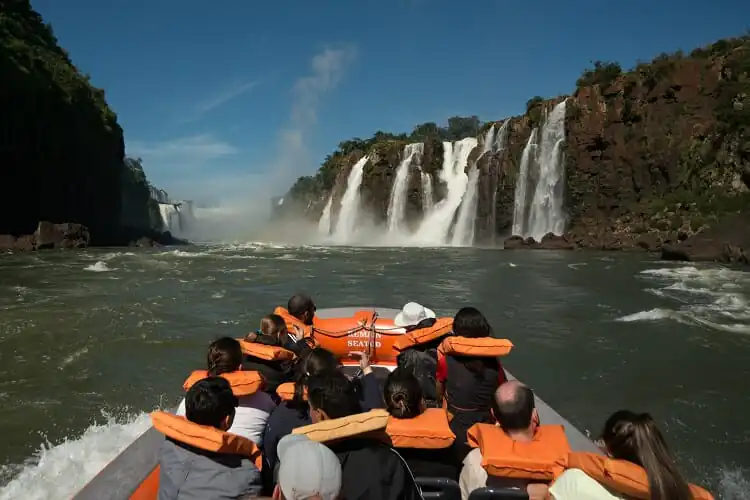
Then come the boat experiences. On the Argentine side, the most famous is La Gran Aventura, a thrilling ride that combines jungle and river before taking you close to the falls. It is wet, loud, fun, and not especially gentle. You should expect to get soaked. There is also the Aventura Náutica option, focused on the river and waterfall approach, usually shorter than the full Gran Aventura.
On the Brazilian side, Macuco Safari offers a similar adrenaline-based boat experience. Travelers often ask which is better: Macuco Safari or La Gran Aventura. The honest answer is that both are exciting, but if you are already dedicating a full day to the Argentine park, La Gran Aventura can fit very naturally into that day. If you are staying or spending more time on the Brazilian side, Macuco Safari makes sense there. You do not need to do both unless you have a deep personal calling to be repeatedly drenched by UNESCO-level water.
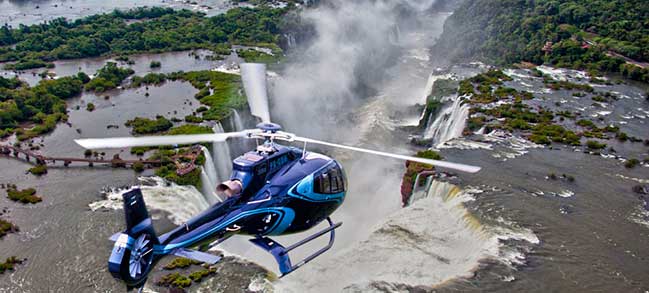
The helicopter ride operates from the Brazilian side and gives a completely different perspective. It is short, scenic, and impressive, especially for travelers who love aerial views. It is not the quietest or most intimate way to experience the falls, but visually, it is spectacular.
Parque das Aves, also on the Brazilian side, is one of the best complements to the falls. It focuses on bird conservation and allows travelers to see toucans, macaws, and other species up close. It pairs very well with the Brazilian panoramic walkways.
Other regional visits include the Wanda Mines, the Ruins of San Ignacio, and the Itaipu Dam. These are not usually the first choices for travelers with limited time, but they can be interesting for those staying longer or looking for a broader regional context. The Ruins of San Ignacio, in particular, can appeal to travelers interested in Jesuit history and the cultural layers of northern Argentina.
For a more human and cultural experience, some travelers may include a visit with a local Mbya Guarani community. These visits can offer a respectful introduction to local traditions, forest knowledge, medicinal plants, and community life. Done properly, with the right operators and expectations, it can add a meaningful dimension to a trip that otherwise focuses mostly on landscape.
6. Where to Stay: Inside the Park or in Puerto Iguazú?
Where you stay changes the feeling of your Iguazú experience.
On the Argentine side, the most iconic option is Meliá Iguazú, located inside Iguazú National Park. Its great advantage is location. You are not just near the falls. You are inside the park, with views that few hotels in South America can offer. Waking up and seeing the mist rising in the distance is very special.
Staying at Meliá can also make the Argentine side feel more relaxed, especially if you want early access, beautiful views, and the sense that the falls are part of your hotel experience rather than a day trip from town.
That said, travelers should understand what they are choosing. Meliá Iguazú is about location, views, and convenience. It is not always the most intimate boutique experience, and depending on the traveler, a lodge or hotel outside the park may feel more personal.
Puerto Iguazú offers several alternatives, from comfortable hotels to more nature-oriented properties. Staying outside the park can work very well if you prefer a quieter setting, better value, or a hotel with a different style. With private transfers and good planning, the logistics are still easy.
On the Brazilian side, Belmond Hotel das Cataratas is the great classic. It sits inside Iguaçu National Park and has that old-world, elegant, almost theatrical quality that Belmond does so well. If Meliá is the privileged Argentine-side option, Belmond is the grand Brazilian-side counterpart. For travelers who want the most refined hotel experience in the area, Belmond is a serious contender.
Some itineraries may even justify staying on one side and visiting the other, depending on flight plans and onward travel. The decision should not be made only by country. It should be made by the full route, hotel preference, border logistics, and how you want the Iguazú chapter to feel.
7. The Meliá Iguazú Experience: Views, Monkeys and a Few Jungle Rules
Meliá Iguazú deserves its own mention because for many travelers, it is the hotel they imagine when they picture visiting Iguazú Falls Argentina.
Its biggest strength is obvious: the view. Very few hotels allow you to sit with a drink, look out across the jungle, and see the falls in the distance. That alone makes the stay memorable. It is especially appealing for honeymooners, couples, families who want convenience, or travelers who do not want to spend extra time transferring in and out of the park.
The hotel also gives Iguazú a softer rhythm. Instead of visiting the park as a single excursion, you feel surrounded by it. Morning mist, tropical birds, heavy green vegetation, and the constant sense that the falls are nearby.
But this is still the jungle, and the jungle has opinions.
At Meliá, monkeys may appear around balconies and outdoor areas. They are clever, fast, and deeply uninterested in your concept of personal property. Guests should keep balcony doors closed, avoid leaving food outside, and be careful with sunglasses, bags, and anything that looks remotely stealable. A monkey inspecting your room may sound funny until it leaves with something important.
The same goes for coatíes inside the park. They may look charming, but they are wild animals and can become aggressive around food. Do not feed them, do not touch them, and do not underestimate their talent for snack-related crime.
These details are not meant to scare you. They are part of what makes Iguazú feel so alive. But a little awareness goes a long way. The rainforest is not a decorative background. It is the main character, and everyone else is a guest.
8. Wildlife, Jungle and Cultural Experiences Around Iguazú
One of the most beautiful surprises of Iguazú is that the falls are only part of the ecosystem. The jungle around them is full of movement. Butterflies gather on wet stones. Toucans flash between trees. Coats of mist hang in the air. The soundscape changes constantly: insects, birds, water, leaves, distant thunder from the falls.
Wildlife sightings are never guaranteed, but they are part of the atmosphere. You may see monkeys, coatíes, colorful birds, and more butterflies than seems reasonable. For photographers and nature lovers, Iguazú offers a lot beyond the main viewpoints.
This is also a region with deep Guarani heritage. For travelers interested in culture, a visit to a Mbya Guarani community can add another layer to the stay. These experiences vary depending on the operator and community, but they may include guided walks through forest paths, explanations of traditional knowledge, medicinal plants, crafts, and the relationship between the community and the surrounding land.
It is important to approach this kind of experience with respect. It should not feel like a performance staged for tourists. At its best, it is a chance to listen, learn, and support community-led tourism in a thoughtful way.
For some travelers, this cultural visit may be a meaningful contrast to the grandeur of the falls. Iguazú is not only water and jungle. It is also home, history, and territory.
9. Logistics: Flights, Transfers, Border Crossing and How to Combine Iguazú with Argentina
Iguazú is easy to include in a larger Argentina trip, but it needs to be planned properly. The Argentine airport is near Puerto Iguazú, while the Brazilian airport serves Foz do Iguaçu. Which one makes sense depends on your full itinerary.
For Argentina-based trips, most travelers reach Iguazú through Buenos Aires. There are also routes that may connect Iguazú with Salta depending on season and schedules, which can be very useful for travelers combining northern Argentina with the falls.
This matters because Iguazú pairs beautifully with different types of trips.
For first-time travelers spending two or three weeks in Argentina, Iguazú can represent the subtropical north and create a strong contrast with Patagonia, Mendoza, or Buenos Aires. In one journey, you can move from glaciers to vineyards to rainforest, which is part of what makes Argentina such a rewarding destination.
For travelers visiting outside Patagonia’s peak season, Iguazú can be even more useful. A route such as Buenos Aires, Mendoza, Salta and Jujuy, and Iguazú can be excellent during periods when southern Patagonia is less appealing or more weather-dependent. Salta and Jujuy bring desert landscapes, colonial towns, high-altitude scenery, and Andean culture. Iguazú adds the rainforest and waterfalls. Together, they create a rich northern Argentina journey without forcing Patagonia into the itinerary when it may not be the right season.
Iguazú can also work as a bridge into Brazil. Foz do Iguaçu, on the Brazilian side, offers connections to different parts of Brazil, which can be helpful for travelers continuing to Rio de Janeiro, São Paulo, or a beach destination. This is especially useful for those who want to combine Argentina with a few days of coast, city, or island-style relaxation in Brazil.
Border crossing between Argentina and Brazil is usually straightforward with private transfers, but it still requires planning. You need to consider passport requirements, visa rules depending on nationality, timing at immigration, and whether you are crossing for a day visit or continuing onward. A well-built itinerary avoids tight flight connections on border-crossing days.
In terms of season, Iguazú can be visited year-round. Summer is hot, humid, lush, and intense. Winter is generally milder and can be more comfortable for walking. Rain can happen at any time, and water levels vary, which changes the feeling of the falls. There is no single perfect month for everyone. The best time depends on your tolerance for heat, your wider Argentina itinerary, and whether you prefer maximum jungle intensity or easier walking conditions.
For luxury travelers, the real key is not only choosing the right season. It is choosing the right pace. Iguazú is much better when it is not treated as a rushed detour. Two or three nights, private transfers, a good guide, and a thoughtful combination of both sides can turn it from “we saw the falls” into one of the most memorable chapters of the trip.
FAQs About Iguazú Falls Argentina
Is Iguazú Falls better from Argentina or Brazil?
The Argentine side is better for a deeper, more immersive visit. You walk through several circuits, reach different viewpoints, and experience the falls from close range. The Brazilian side is better for panoramic views and understanding the full scale of the waterfalls. Ideally, visit both. Argentina gives you the experience. Brazil gives you the postcard.
How many days do you need in Iguazú Falls Argentina?
Two nights is the minimum recommended for most travelers. This allows you to visit the Argentine side properly and, depending on flights, add the Brazilian side. Three nights is better if you want a more relaxed pace, include a boat ride, visit Parque das Aves, enjoy your hotel, or add a cultural or regional experience.
Is it worth staying at Meliá Iguazú?
Yes, for many travelers, Meliá Iguazú is worth it because of its location inside the Argentine national park and its views toward the falls. It is especially appealing if you want convenience, scenery, and a stronger sense of being surrounded by the park. Just remember that the jungle is very present, including monkeys and coatíes, so balcony doors and loose belongings require attention.
Can you visit both the Argentine and Brazilian sides in one trip?
Yes, and it is highly recommended if your schedule allows. The two sides are very different and complement each other well. The Argentine side usually requires more time, while the Brazilian side can often be visited in a shorter half-day experience. With private transfers, the border crossing is manageable, but it should be planned carefully.
What are the best activities beyond the falls?
The most popular additions are La Gran Aventura or Aventura Náutica on the Argentine side, Macuco Safari on the Brazilian side, Parque das Aves, and the helicopter ride from Brazil. Travelers with more time can also consider the Ruins of San Ignacio, Wanda Mines, Itaipu Dam, or a respectful visit to a local Mbya Guarani community.
Iguazú works best when it is not treated as a quick photo stop. The falls are extraordinary, of course, but the full experience is bigger than the water: the jungle, the wildlife, the hotels, the border, the cultural context, and the way it fits into a broader journey through Argentina or South America.
For travelers who want to see different faces of the country, Iguazú Falls Argentina is one of the most powerful chapters to include. It is tropical, dramatic, surprisingly emotional, and completely different from anywhere else in Argentina.