El Calafate is not the kind of place you simply “visit.” It is the kind of place that changes the rhythm of a journey.
Set on the edge of Lago Argentino, surrounded by open Patagonian steppe, ancient ice fields, remote estancias, glacial lakes, and some of the most dramatic landscapes in South America, El Calafate is one of Argentina’s most extraordinary destinations for travelers who want nature at full volume, without giving up comfort, privacy, or thoughtful planning.
For many travelers, El Calafate is synonymous with the Perito Moreno Glacier. And yes, this world-famous wall of ice is one of the great natural spectacles of Patagonia. But luxury travel in El Calafate goes far beyond standing in front of a glacier with a camera. Done properly, this destination can include private transfers, carefully selected lodges, exclusive glacier navigation, remote estancia experiences, soft adventure, wildlife encounters, Patagonian cuisine, and seamless connections to El Chaltén, Torres del Paine, Bariloche, Ushuaia, and beyond.
The key is knowing how to design the experience.
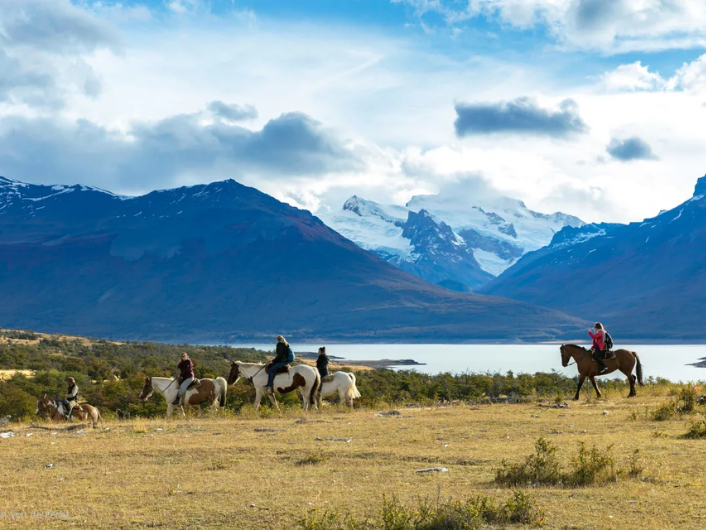
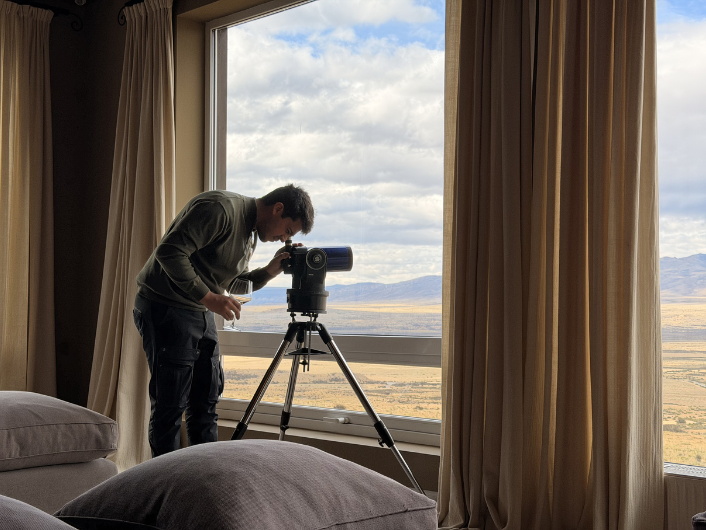
El Calafate can be wild, elegant, remote, adventurous, or deeply relaxing, depending on where you stay, how you move, and which experiences you choose. It can be a place to walk on ancient ice, navigate among floating icebergs, ride horses through historic estancias, learn about the first inhabitants of the region, taste Patagonian lamb by the fire, or simply sit with a glass of wine while the wind moves across the steppe like an invisible animal.
But to make the most of your time here, especially as a discerning traveler, there are several important things to consider.
Below, we explore how to plan luxury travel in El Calafate with the right season, hotels, lodges, experiences, logistics, gastronomy, and local insight.
1. Why El Calafate Is a Top Luxury Travel Destination
El Calafate is one of the best destinations in Patagonia for travelers who want a powerful natural experience without the logistical roughness that often comes with remote places.
It offers access to glaciers, lakes, mountains, estancias, wildlife, trekking, navigation, and history, yet it remains surprisingly practical. The town has an airport, quality accommodations, good restaurants, private guiding options, and strong connections with other major Patagonian destinations.
This balance is what makes El Calafate so valuable.
Some travelers come for the drama of the ice. Others come for the silence of the steppe. Some want adventure, like glacier trekking, horseback riding, hiking, or 4×4 excursions. Others want comfort, slow mornings, excellent views, and memorable meals. Many want a combination of both.
El Calafate works beautifully for all of them.
The destination is especially appealing because it can be adapted to very different travel styles. A couple on a luxury honeymoon may prefer a remote lodge with panoramic views, private transfers, and intimate glacier experiences. A family may choose a comfortable hotel near town, combining adventure during the day with relaxed dinners at night. A group of friends may want a more active itinerary with glacier trekking, Estancia Cristina, hiking, and navigation. A multi-generational family may need a softer version, with private guides, flexible pacing, and experiences that do not require intense physical effort.
Luxury here is not necessarily about gold-plated details. Patagonia has its own definition of luxury. It is space. Silence. Access. Timing. Privacy. Warm hospitality after a day in the wind. A table near the fire. A guide who knows when to stop for the best view. A transfer that arrives exactly when it should. A lodge that feels connected to the landscape rather than imposed on it.
That is why luxury travel in El Calafate requires more than choosing the most expensive hotel. It requires thoughtful curation.
The best trips are designed around the traveler, not around a generic checklist.
2. Best Time of Year to Visit El Calafate
El Calafate can technically be visited year-round, but for most luxury travelers, the best season is from October to March.
During these months, Patagonia offers longer days, more comfortable temperatures, better conditions for outdoor activities, and a wider range of available experiences. This is also when the landscapes feel most alive, with open trails, active excursions, and long golden evenings that stretch the day beautifully.
November, December, January, February, and March are usually the most attractive months for travelers who want to combine glacier experiences, navigation, hiking, estancia visits, and relaxed exploration. The days are long, which matters enormously in Patagonia. More daylight means more flexibility, better pacing, and more time to enjoy the landscapes without feeling rushed.
October can be a wonderful option for those who want to arrive before the peak of the season. The atmosphere is quieter, the destination begins to wake up after winter, and many experiences resume operation. However, weather can still feel unpredictable, so flexibility is important.
April can also be beautiful. The colors begin to shift, the crowds are lower, and the atmosphere becomes more contemplative. But April depends more heavily on the year. If winter arrives early, the cold can become more hostile, and certain activities may feel less comfortable. For travelers seeking soft adventure with elegance and ease, April can work very well when planned carefully.
The peak summer months, especially January and February, bring the warmest conditions and the most activity. They also bring higher demand. Hotels, lodges, guides, and premium experiences can fill up quickly. For travelers looking for the best rooms, the best guides, or exclusive experiences, planning in advance is essential.
The main thing to understand is that Patagonia is never fully predictable. Even in summer, the weather can change quickly. Wind, rain, sun, and cold can appear in the same day. A good itinerary should never be designed like a rigid machine. It should breathe. It should allow room for the personality of Patagonia.
That is part of the magic, but also part of the planning challenge.
For luxury travel in El Calafate, the ideal strategy is not simply choosing the “best month.” It is choosing the right month for your travel style, then building an itinerary that makes sense for the season.
3. Where to Stay in El Calafate
Where you stay in El Calafate will shape the entire experience.
This is one of the most important decisions in the planning process, because each accommodation style creates a very different version of the destination.
Some travelers imagine waking up near the glaciers, surrounded by untouched landscapes, far from town. Others prefer to stay closer to restaurants, shops, and the livelier rhythm of El Calafate. Some want a remote lodge with built-in experiences. Others want a comfortable base from which to explore privately during the day and return to town in the evening.
There is no single best answer. There is only the right answer for each traveler.
If you want a lodge with glacier views or a property located close to the ice, you should know that these places are often remote. This remoteness is part of their charm, but it also means you may be farther from town, more dependent on the lodge’s own experiences, and less flexible when it comes to dining independently or changing plans at the last minute.
For travelers seeking disconnection, exclusivity, and a deeper sense of place, this can be ideal. Remote lodges can offer the feeling of being inside Patagonia rather than simply visiting it. The silence is different. The views are wider. The experience feels more immersive.
For others, staying closer to town may be the smarter choice.
El Calafate town has its own appeal. After a day of glacier trekking, navigation, or estancia exploration, many travelers enjoy returning to a comfortable hotel, taking some time to rest, and then going out for dinner. This is especially appealing for those who want to try Patagonian lamb, trout, guanaco, venison, local wines, or simply enjoy a relaxed night in town.
The right hotel in town can make the whole trip feel smooth. Over the years, we have seen that excellent hospitality in El Calafate depends on more than location or design. Warm attention, responsiveness, cordial service, and the ability to take care of guests during a very busy season matter enormously.
El Calafate has a long and intense high season, and many hotels operate at full capacity for weeks. In that context, the properties that continue to offer attentive service, good communication, and genuine care are the ones that consistently create the best stays.
Hotels such as Xelena, Design Suites, Esplendor, and Kosten Aike can work very well for travelers who want comfort, reliability, and easier access to town. Each has its own style, but what matters most is matching the property to the traveler’s expectations.
In El Calafate, accommodation is not just about where you sleep. It is about how you want to experience Patagonia.
4. Remote Luxury Lodges and Exclusive Glacier Experiences
For travelers who want something more secluded, El Calafate offers access to some extraordinary remote stays and lodge-based experiences.
One of the most special examples is Nibepo Aike, a historic estancia located inside Los Glaciares National Park. This is not a conventional hotel experience. It is more intimate, more connected to the land, and ideal for travelers who want to feel the character of rural Patagonia.
From Nibepo Aike, guests can access remarkable experiences by small boat, navigating the southern arm of Lago Argentino toward Brazo Rico and the southern face of the Perito Moreno Glacier. This kind of experience feels completely different from the more standard glacier visit. The scale of the landscape becomes more personal. The boat, the silence, the ice, the water, the wind, and the sense of distance all combine into something deeply memorable.
One of the most beautiful parts of this experience is the timing. After navigating near the glacier, travelers can disembark and walk the glacier boardwalks at an hour when the largest crowds have already left. This changes everything. Perito Moreno is magnificent at any time, but seeing it when the walkways are quieter makes the encounter feel much more intimate.
There is also something wonderfully Patagonian about enjoying whisky and chocolate while surrounded by ice, wind, and wilderness. It is simple, warm, and theatrical in the best possible way.
For more adventurous travelers, there are experiences that begin with walks through Patagonian forests before boarding a vessel to navigate toward less visited glaciers such as Dickson, Cubo, and Grande. These outings are ideal for those who want to go beyond the classic highlights and experience a more remote side of the region.
Another excellent option is Pristine, one of the few accommodations offering views toward the Perito Moreno Glacier. For travelers dreaming of waking up with the glacier in the distance, this kind of property can be incredibly appealing. It offers that rare feeling of having the landscape present even when you are not actively exploring.
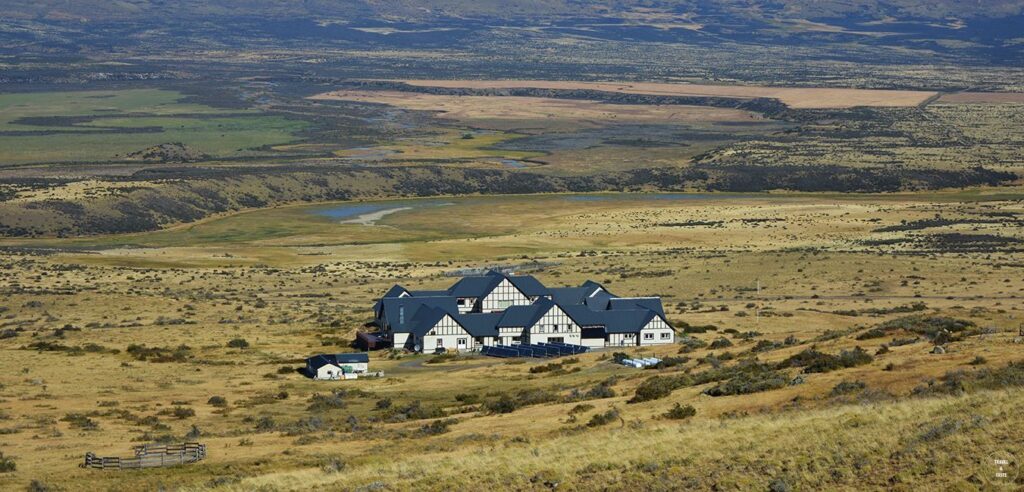
Then there is EOLO, a superb intermediate option for travelers who want vast landscapes, refined hospitality, and a strong sense of place without being too far from town. Set in the Patagonian steppe, surrounded by majestic scenery and wildlife, EOLO feels remote and peaceful, yet it is only about 30 minutes from El Calafate and well positioned for visiting Los Glaciares National Park.
This makes EOLO a beautiful choice for travelers who want elegance, space, nature, and logistical practicality in one place.
The key is understanding the personality of each lodge. Nibepo Aike feels historical, authentic, and estancia-based. Pristine offers rare glacier-facing appeal. EOLO brings a refined steppe experience with excellent access. A hotel in town offers more independence and dining flexibility.
Each one unlocks a different El Calafate.
5. Essential Glacier Experiences in El Calafate
No luxury trip to El Calafate is complete without experiencing the glaciers properly.
The Perito Moreno Glacier is the star, and for good reason. It is one of the most accessible and spectacular glaciers in the world, with a massive ice front that rises from the water and constantly shifts, cracks, and calves into Lago Argentino. The sound alone is unforgettable. It is not just a view. It is a living landscape.
The classic visit includes the glacier boardwalks, which offer different panoramic viewpoints from several angles. For many travelers, this is the best introduction to the glacier, because it allows time to observe the ice slowly. The longer you stay, the more you notice: blue crevasses, shadows, fractures, towers, movement, silence, and sudden thunder when ice breaks into the lake.
For those who want a more active experience, glacier trekking is one of the great adventures in El Calafate.
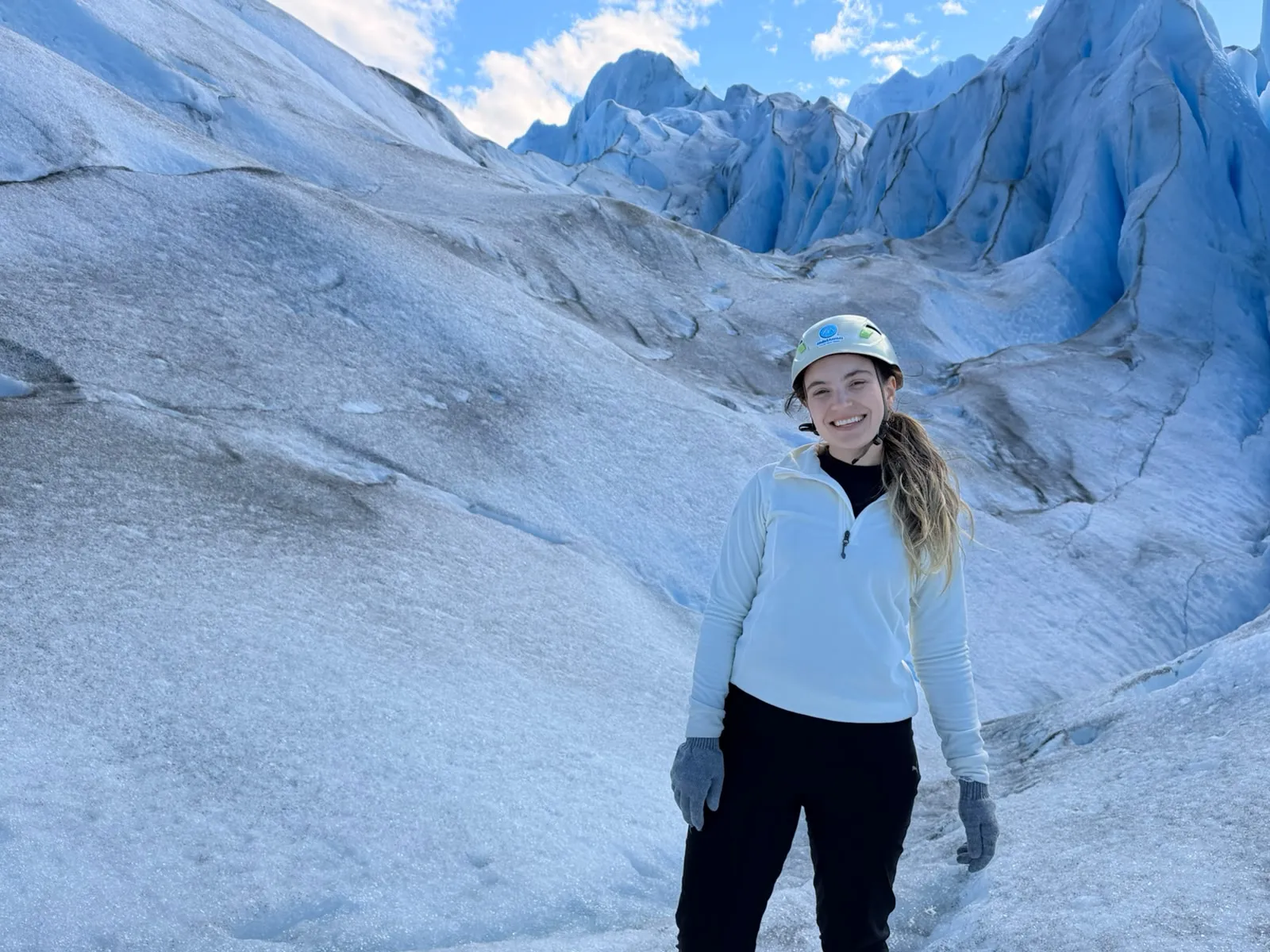
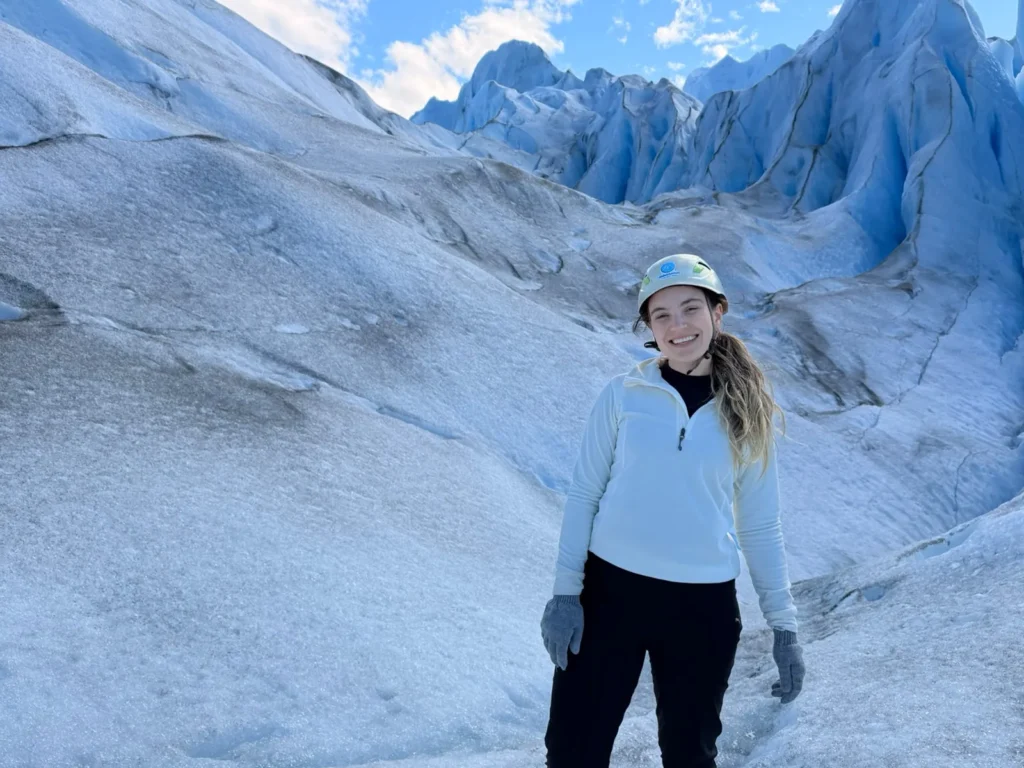
The famous Minitrekking experience allows travelers to walk on the ice with crampons, accompanied by professional guides. It is an unforgettable way to understand the glacier not only as something to look at, but as a surface, a texture, a frozen world under your own feet. You see small lagoons, ice formations, deep blues, and strange shapes carved by time and weather.
For travelers who want something more demanding, Minitrekking 2.0 and Big Ice offer more intense versions. Big Ice is the most adventurous option and is designed for travelers with a stronger appetite for physical activity. It is not for everyone, but for those who love active travel, it can be one of the defining experiences of a Patagonia trip.
Navigation is another essential part of the region. Seeing glaciers from the water gives a completely different perspective. The boat moves among icebergs, with mountains and ice fields unfolding in the distance. It is cinematic, but also deeply quiet. There is something about navigating Patagonian waters that makes the scale of the landscape feel almost unreal.
Depending on the traveler, navigation can be private, semi-private, small-group, or part of a larger excursion. The best choice depends on budget, expectations, timing, and the kind of atmosphere you want.
For luxury travelers, the main difference often comes down to timing, privacy, and flow. Visiting the glacier with a private guide, avoiding the busiest hours when possible, including the right navigation, and choosing experiences that match your energy level can transform the day from “touristic highlight” into something much more personal.
The glacier is the same. The way you experience it is not.
6. Estancia Cristina: A Full-Day El Calafate Experience
Estancia Cristina is one of our favorite experiences in the El Calafate region, and one we often recommend to travelers who want a full day of scenery, history, navigation, and adventure.
The journey begins with a navigation along the northern arm of Lago Argentino, passing through a landscape of icebergs, mountains, and vast glacial waters. The approach itself is part of the experience. Travelers navigate toward the Upsala Glacier area, with panoramic views that feel immense even by Patagonian standards, before continuing through Canal Cristina to reach the estancia.
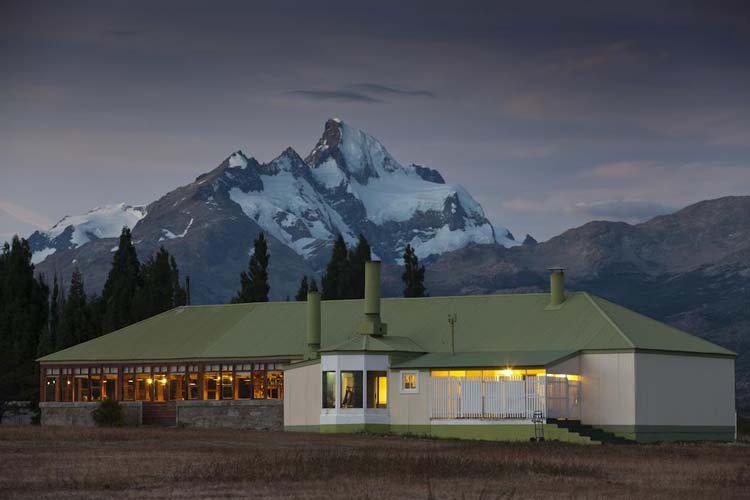
This is not simply a transfer. It is a slow unveiling of the landscape.
Once at Estancia Cristina, travelers can choose from different types of experiences depending on their interests and physical condition.
One of the most impressive options is the 4×4 excursion to the Upsala Glacier viewpoint. From there, travelers can admire panoramic views of the Upsala Glacier, Lago Guillermo, the Southern Patagonian Ice Field, and the Andes. It is one of the great viewpoints in the region, and it gives a powerful sense of the size and importance of the ice field.
For travelers who love horseback riding, the estancia also offers a beautiful ride toward Lago Pearson. This is a more traditional Patagonian way to experience the landscape, moving at a slower pace through open terrain, surrounded by silence and space.
For more active travelers, the trekking option through the Cañadón de los Fósiles is extraordinary. This route takes almost five hours and leads through a canyon filled with geological history. It is ideal for those who want a deeper physical connection with the landscape and are not satisfied with simply observing Patagonia from a vehicle or boat.
What makes Estancia Cristina so special is the combination of elements. You have navigation, icebergs, remote history, estancia culture, mountain views, glacier panoramas, and different activity levels in one day. It feels complete, but not generic.
It is also a wonderful choice for travelers who want to go beyond Perito Moreno and understand that El Calafate is not a one-glacier destination. The region is much richer than that. Estancia Cristina opens the door to a more remote and layered Patagonia.
For discerning travelers, this is often one of the days they remember most.
7. Culture, History, Food, and the Softer Side of El Calafate
El Calafate is famous for ice, but the destination also has a quieter cultural and culinary side that should not be overlooked.
For travelers interested in history, Nativo Experience is a very worthwhile addition. This activity explores the human history of the region, including the first inhabitants of the area, the relationship between people and landscape, and the stories hidden in the shores of Lago Argentino. It is especially valuable for travelers who want more context and do not want Patagonia to be only a sequence of beautiful views.
A luxury trip should include this kind of depth. Beauty is more powerful when you understand what you are looking at.
Food is another important part of the El Calafate experience. After long days outdoors, dining becomes part of the ritual. The wind, the cold, the movement, the open landscapes, and the physicality of the activities make dinner feel especially satisfying.
Patagonian lamb is the classic dish, often cooked slowly and traditionally, with the kind of flavor that belongs to this part of the world. Trout is another excellent choice, especially for those who prefer lighter but still regional cuisine. Depending on the restaurant and season, travelers may also find guanaco or venison, both of which reflect the wilder culinary identity of Patagonia.
For wine lovers, El Calafate is also a wonderful place to enjoy Argentine wines after a day on the ice. A rich Malbec, a Patagonian Pinot Noir, or a crisp white wine can be exactly what the evening requires. This is not Buenos Aires dining, nor Mendoza wine-country dining. It has its own mood: rustic, warm, elemental, and often centered around fire.
This is one of the reasons some travelers prefer staying closer to town. Being able to go out for dinner, try different restaurants, and enjoy the local atmosphere can add a lot to the stay. For others, a lodge-based dining experience is preferable, especially when the goal is to disconnect and stay immersed in the landscape.
The best itinerary may even combine both styles: a few nights in or near town for activity and dining flexibility, followed by a more remote lodge experience for silence and immersion.
El Calafate rewards this kind of thoughtful pacing.
It is not just about adding more tours. It is about creating contrast: ice and fire, movement and rest, remote silence and warm hospitality, adventure and comfort.
8. El Calafate as the Perfect Gateway to Southern Patagonia
El Calafate is not only a destination. It is also one of the most practical gateways to Southern Patagonia.
This matters enormously when designing a luxury itinerary, because the beauty of Patagonia comes with logistical complexity. Distances are long, flights are limited, weather can affect plans, and overland transfers require careful coordination. El Calafate helps solve some of these challenges.
For travelers visiting El Chaltén, El Calafate is essential. The airport is located here, and El Chaltén is approximately 2.5 hours away by road. This makes El Calafate the natural entry or exit point for travelers who want to combine glaciers with Mount Fitz Roy, high-end trekking, and the mountain village atmosphere of El Chaltén.
For those continuing to Torres del Paine in Chile, El Calafate is also very useful. The journey takes approximately 3.5 hours by road, depending on border conditions and the exact destination. This works especially well for travelers who arrive through Buenos Aires or who are already exploring Argentina before crossing into Chile.
El Calafate also has seasonal and practical air connections with other important destinations. Direct flights to Ushuaia, sometimes up to several per day in high season, make it possible to combine glaciers with Tierra del Fuego, penguins, the Beagle Channel, and even Antarctica cruise departures. There are also direct connections with Bariloche on certain days, which can help travelers design a broader Patagonian itinerary without constantly returning to Buenos Aires.
This is where expert planning becomes essential.
On a map, Patagonia can look simple. In reality, it is a giant puzzle made of flight schedules, road distances, weather windows, hotel availability, activity timing, and traveler energy levels. A poorly planned itinerary can waste precious time. A well-designed one can feel effortless.
El Calafate fits beautifully into many luxury Argentina itineraries. It can be combined with Buenos Aires for culture and food, Mendoza for wine, Bariloche for lakes and mountain scenery, Ushuaia for the end of the world, El Chaltén for trekking, and Torres del Paine for Chilean Patagonia.
The destination is not only spectacular. It is strategically useful.
That combination makes El Calafate one of the most important pieces in a high-end Patagonia journey.
Final Thoughts: How to Plan Luxury Travel in El Calafate the Right Way
El Calafate can be many things.
It can be a once-in-a-lifetime glacier encounter. It can be a soft adventure destination. It can be a romantic Patagonian escape. It can be the beginning of a deeper journey into El Chaltén or Torres del Paine. It can be a place for families, couples, hikers, photographers, food lovers, or travelers who simply want to feel the immensity of the natural world without losing comfort.
But the best version of El Calafate does not happen by accident.
It depends on choosing the right season, the right hotel or lodge, the right activities, the right pace, and the right logistics. It means knowing when to stay in town and when to go remote. It means understanding which glacier experiences are worth it for each traveler, which navigations feel more exclusive, and how to avoid turning Patagonia into a rushed checklist.
Luxury travel in El Calafate is not about doing everything.
It is about doing the right things, in the right order, with enough space to actually feel them.
At Tailored Argentina, we design fully customized luxury journeys across Argentina and Patagonia, matching each itinerary to the traveler’s interests, travel style, timing, and expectations. For El Calafate, that might mean a private glacier day with expert guiding, a remote estancia stay, a carefully timed visit to the Perito Moreno boardwalks, a navigation among icebergs, a 4×4 adventure at Estancia Cristina, or a seamless connection onward to El Chaltén, Torres del Paine, Bariloche, Ushuaia, Buenos Aires, or Mendoza.
Patagonia is too vast, too beautiful, and too logistically delicate to leave to chance.
Handled well, El Calafate becomes more than a stop on the map.
It becomes the icy heart of the journey.
FAQs About Luxury Travel in El Calafate
1. How many days should I spend in El Calafate?
For most luxury travelers, three nights is a good minimum for El Calafate. This allows time for the Perito Moreno Glacier, one major full-day experience such as Estancia Cristina or glacier trekking, and a little breathing room in case of weather changes. Travelers who want a slower pace, remote lodges, or more adventure may prefer four nights.
2. Is El Calafate worth visiting if I am not very adventurous?
Yes. El Calafate is excellent even for travelers who do not want intense physical activity. The Perito Moreno Glacier boardwalks, scenic navigation, estancia visits, private guiding, 4×4 viewpoints, and great restaurants can all be enjoyed without demanding trekking. The destination can be designed as soft adventure rather than extreme adventure.
3. What is the best luxury hotel or lodge in El Calafate?
There is no single best option for everyone. EOLO is ideal for travelers seeking refined remoteness in the steppe with strong logistics. Nibepo Aike is wonderful for an authentic estancia experience inside the national park. Pristine is appealing for glacier views. Hotels closer to town, such as Xelena, Design Suites, Esplendor, and Kosten Aike, work well for travelers who want comfort, service, and easy access to restaurants.
4. Can I walk on the Perito Moreno Glacier?
Yes. Travelers can walk on the glacier through guided ice trekking experiences such as Minitrekking, Minitrekking 2.0, or Big Ice. These activities vary in difficulty and duration. Minitrekking is the most accessible, while Big Ice is more demanding and better suited for active travelers with strong mobility and endurance.
5. Is El Calafate easy to combine with El Chaltén or Torres del Paine?
Yes. El Calafate is the main logistical gateway for El Chaltén, which is about 2.5 hours away by road. It is also a practical connection point for Torres del Paine in Chile, approximately 3.5 hours away depending on border crossing and final destination. This makes El Calafate ideal for broader Patagonia itineraries.
6. When should I book a luxury trip to El Calafate?
For peak season travel, especially between October and March, we recommend planning your trip at least four months in advance. The more exclusive the lodge, hotel, guide, or private experience, the earlier you should start. In some of the most sought-after properties, availability can be extremely limited, and even six months in advance certain rooms or dates may already be fully booked.
If you start planning closer to the travel date, around two months in advance for example, it can still be possible to create a beautiful trip, but flexibility becomes essential. You may need to be open to different hotel categories, room types, travel dates, or activity timings. In Patagonia, the best journeys are not just booked. They are carefully secured before the season tightens its grip.