Securing the Hardest Puertas Cerradas Reservations in Buenos Aires
If you are curious about what puertas cerradas Buenos Aires has to offer, the first thing to understand is that this is not really about “finding a hidden restaurant.” It is about accessing a very particular side of the city’s dining culture, one that feels more intimate, more personal, and often much harder to get into than travelers expect. And that is exactly the appeal.
Buenos Aires has always had a strong social food culture. People here do not just go out to eat. They gather, linger, talk too long, order another bottle, and turn dinner into the whole evening (you wouldn’t believe how many of our travelers go back home surprised at how Argentines turn each and every event into a food one). Puertas cerradas fit beautifully into that rhythm, but in a more private, more discreet, and often more memorable way.
What puertas cerradas actually are in Buenos Aires
For travelers hearing the phrase for the first time, puertas cerradas literally means “closed doors.” In practice, it refers to a style of dining that feels more private than a conventional restaurant. Sometimes that means a chef-led dinner in a more intimate setting. Sometimes it means a very small restaurant with limited seating, no obvious storefront presence, or a reservation system that feels almost intentionally elusive.
These places tend to feel more personal, more hosted, and less transactional than a standard dinner reservation. You are not just booking a table. You are entering someone’s point of view a little more directly. And in Buenos Aires, that works especially well.
Because this is a city where personality matters. Atmosphere matters. The room matters. The host matters. A dinner can be technically excellent and still feel forgettable if it does not have soul. The best puertas cerradas never have that problem.
Why Private Dining in Buenos Aires Is Often Not Truly Private
This is where I think it helps to be clear.
A lot of travelers ask us for private dining Buenos Aires experiences when what they actually mean is one of three things: something intimate, something exclusive, or something hard to access. Those are not always the same thing.
Some puertas cerradas feel deeply private because they are small, beautifully paced, and carefully run, but you are still dining alongside a handful of other guests. Others can be privatized, but only in certain formats or for larger spend thresholds. Others are not private at all in the technical sense, but they still feel far more exclusive than most restaurant experiences in the city. That is why wording matters so much when planning this kind of evening.
If a traveler wants true privacy, that has to be built intentionally. If what they really want is intimacy, atmosphere, and a dinner that feels unlike everywhere else, then a puertas cerradas format may be exactly right, even if it is not exclusively theirs for the evening.
Why these are some of the hardest reservations in the city
Because they are small, that is the short answer. But more specifically, they are hard because they often have:
- very limited seating
- fewer nights of service
- a more curated rhythm
- no interest in turning themselves into high-volume restaurant machines
- and a loyal mix of locals, returning travelers, and in-the-know visitors already trying to get in
That combination changes everything.
A hotel concierge calling the day before is often not enough. A traveler trying to message casually on social media is often not enough. Even when the place is not globally famous, access can still be tricky because there is simply not much inventory to begin with.
This is also why I always tell travelers not to confuse “not famous” with “easy.” Some of the hardest tables in Buenos Aires are not the loudest ones.
What Makes a Good Puertas Cerradas Experience
Not all of them are worth the effort, that is the truth.
Some places trade heavily on mystery, but the actual meal is not all that special. Some are charming in theory but inconsistent in execution. Some sound like the kind of place you should want to go, but once you’re there, the whole experience feels more gimmicky than meaningful.
The best puertas cerradas Buenos Aires offers are the ones where the intimacy is matched by substance. Good food, obviously. But also pacing, warmth, a sense of occasion, a host or team that knows how to hold the room, a format that feels intentional rather than improvised, and a dinner that gives you the sense that being there was actually worth the planning.
Why Exclusive Restaurants Work Best in Buenos Aires
Argentina has many beautiful dining experiences, of course. Mendoza gives you scenery and wine. Northern Argentina gives you regional depth and a completely different culinary vocabulary. Patagonia can be extraordinary in the right lodge or remote setting.
But when it comes to the kind of exclusivity that feels urban, personal, and slightly elusive, Buenos Aires does it best.
This is where the exclusive restaurants in Argentina that travelers imagine tend to make the most sense. Not because the city is trying to be secretive for sport, but because Buenos Aires naturally supports a more intimate dining culture. The city is stylish without always needing to advertise it. Some of its best evenings still happen behind ordinary facades, inside small dining rooms, or in places that feel more shared by word of mouth than by giant publicity campaigns.
And it is why these dinners work so well for honeymoons, milestone birthdays, high-end family trips, and travelers who have already “done the classics” and want something that feels more personal this time.
Why secret supper clubs BA should never be booked randomly
This is one of those categories where doing your own research can actually make things more confusing, not less.
Because by the time travelers start searching for secret supper clubs in BA, they usually find a mix of:
- outdated recommendations
- places that changed format
- articles written by people who went once (or never)
- experiences that sound more private than they really are
- and very little context about which one fits which kind of traveler
That last part matters a lot.
A couple on their honeymoon does not need the same dinner as a solo foodie traveler. A group of four close friends may want something more energetic. A family celebrating something important might need warmth and flexibility more than concept. Some travelers want a very chef-forward tasting menu. Others want atmosphere first and technicality second.
The right reservation is not just the hardest one to get, it is the one that suits the traveler.
What securing the right one actually requires
In our experience, the hardest part is usually not sending the message. It is knowing where to direct the effort in the first place.
Because the best results come from a combination of:
- timing
- fit
- communication
- and relationships
Some places need to be approached early, some only make sense on certain nights, some are better held for the right kind of traveler, and some are worth prioritizing only if the rest of the itinerary around them makes sense too.
That is another thing people underestimate: the dinner should fit the day. A wonderful puertas cerradas reservation can still land badly if the travelers have been over-scheduled, arrived late, or are on the wrong side of the city after a full day. These evenings usually work best when they are placed carefully, not just “added in.”
The puertas cerradas worth actually talking about
Not all puertas cerradas in Buenos Aires are trying to do the same thing. And that is exactly why they are interesting.
Some feel more like an intimate restaurant, some feel more like being invited into someone’s point of view, some are more chef-led, some more socially driven, some more sensual, and some more polished. If you are trying to understand the category properly, these are the kinds of places that help make the distinctions clearer.
Casa SaltShaker
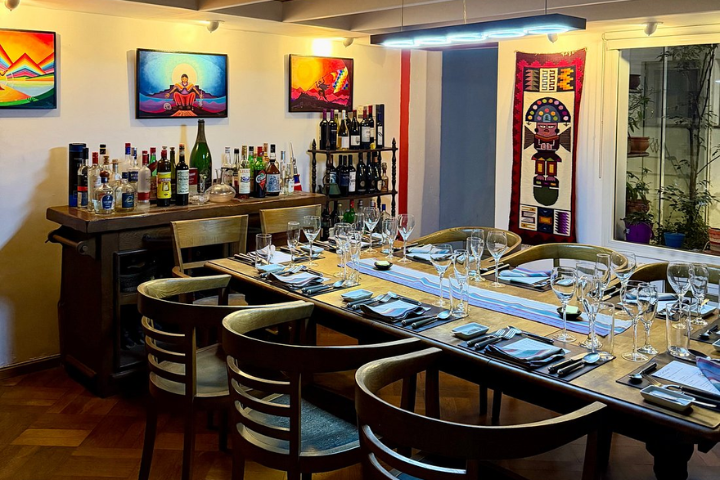
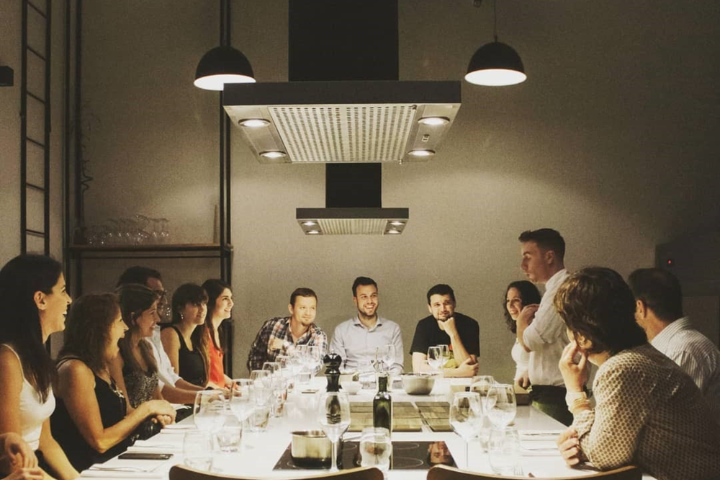
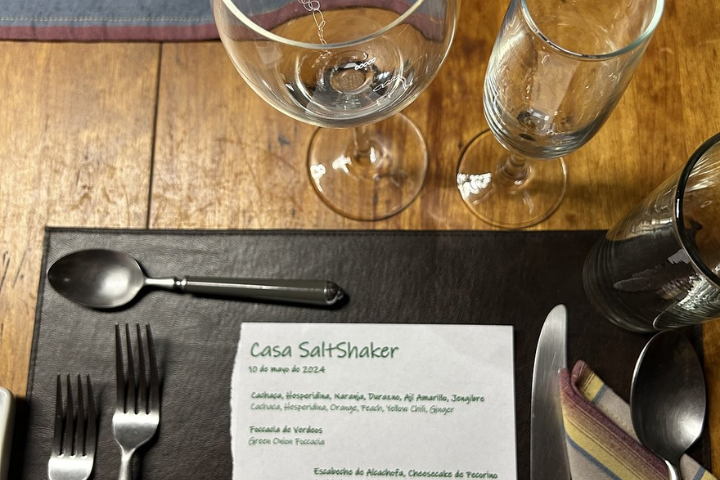
Casa SaltShaker is one of the clearest references in Buenos Aires for the more classic closed-door format because it is built very explicitly around the idea of food, wine, conversation, and a shared table. It is held in the hosts’ home in Recoleta, the setting is casual, and the format is intentionally communal rather than private in the strict sense. Guests dine at a shared table for ten total, and the menu is presented as sophisticated home cooking, usually in a three-course format with paired wines. The culinary voice leans global, with strong influences from Latin America, Asia, and the Middle East, and a noticeable focus on seasonal produce rather than a stereotypical “Argentina equals only steak” approach.
That already tells you a lot about who this is for. Casa SaltShaker makes the most sense for travelers who are genuinely open to a social dinner, who like the hosted feeling, and who do not need the evening to be exclusive to them in order for it to feel special. In many ways, the concept is less “private dining” and more “thoughtfully curated communal dining.”
Treintasillas
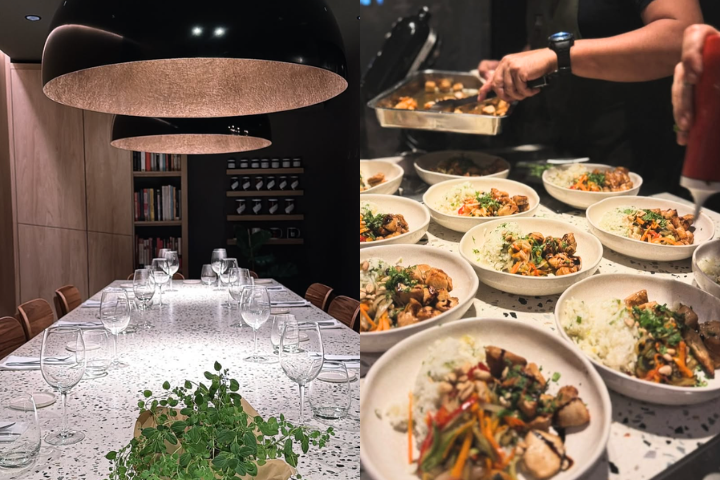
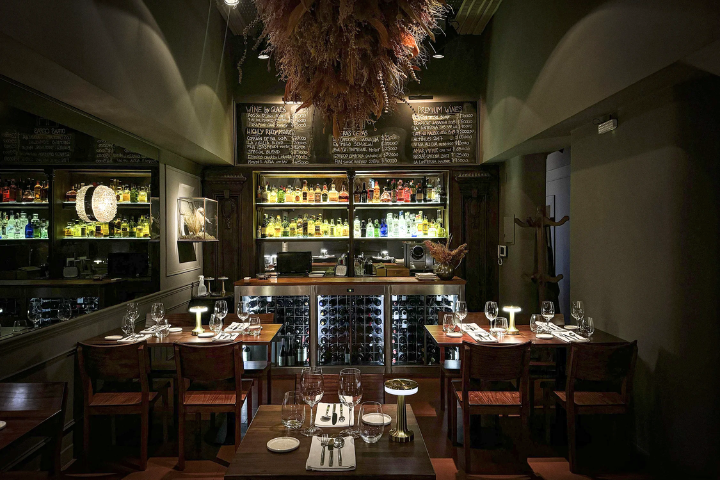
Treintasillas is one of the old guard names in the city when people talk about a puertas cerradas dining, and the concept is right there in the name: Treintasillas means thirty chairs. That matters, because it tells you that intimacy here is not only a mood, it is part of the physical scale of the place. A space limited to thirty diners per night, and that feels consistent with the whole identity of the restaurant. The house itself describes Treintasillas as a private restaurant that can only be visited with prior reservation, with no fixed menu, and tasting menus created by chef Ezequiel Gallardo. It is important to highlight that the menu changes continuously and that the project has been cooking this way for many years without repeating itself.
That combination gives Treintasillas a very specific place in the category. It feels more classically “reservation-only” than Casa SaltShaker, more chef-centered, and more quietly established. This is the kind of dinner I would choose for travelers who want the feeling of a serious, intimate evening rather than a more openly social one. And yes, the fact that the whole concept is literally built around only thirty seats is part of why it still feels special.
4ta Pared
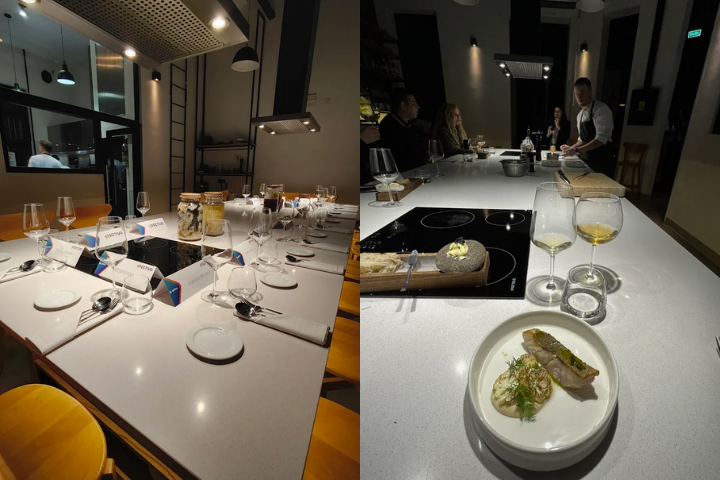
4ta Pared is interesting because it sits at the intersection of intimacy and broader recognition. The MICHELIN Guide describes it as a restaurant somewhat outside the city’s usual gastronomic circuit and explicitly says it is worth tracking down, which already places it in a different category from the more purely underground-style dinner formats. It is not just “hidden.” It is also taken seriously as a restaurant in its own right. Regular services are from Tuesday to Saturday from 8 PM, and they also promote private events, which tells you that while it has some of the contained energy people associate with puertas cerradas, it is also operating with a more restaurant-like structure than the communal-table model.
This is the one I would lean toward for travelers who want intimacy and a certain off-the-radar feeling, but still want the reassurance that the kitchen itself is being recognized at a high level. It is less about mystery for mystery’s sake, and more about a restaurant that happens to feel tucked away and deliberate.
Muy Nuestra
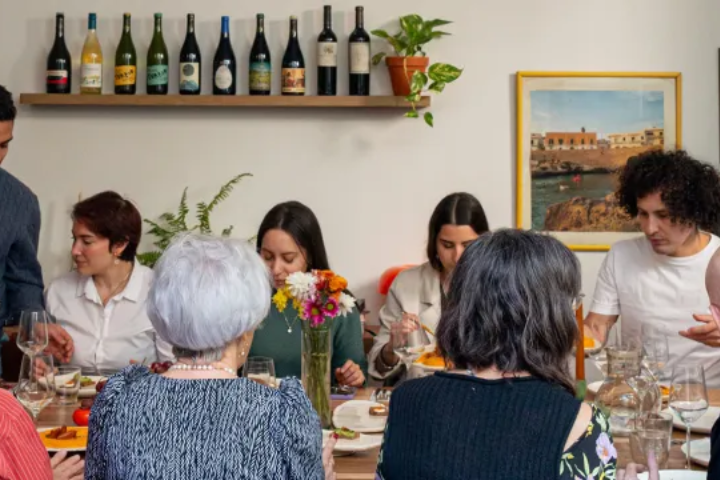
Muy Nuestra sits on a softer, warmer side of this conversation. The project introduces itself very simply as “Welcome to our home”, and defines the format as private events and shared tables in Belgrano, created by Matías Bezruk and Melu Todres. That language matters, because it immediately tells you that the core idea here is not a formal tasting room or a fine-dining performance. It is hospitality. It is closeness. It is the sense that being welcomed is part of the dinner itself.
That makes Muy Nuestra a very good fit for travelers who care as much about atmosphere and warmth as they do about the food itself. It is the sort of place I would think about for couples, smaller celebrations, and people who want the evening to feel held rather than staged. The useful thing here is the concept: shared table or private-event hospitality in a more home-like, emotionally warm format.
Fogón Asado
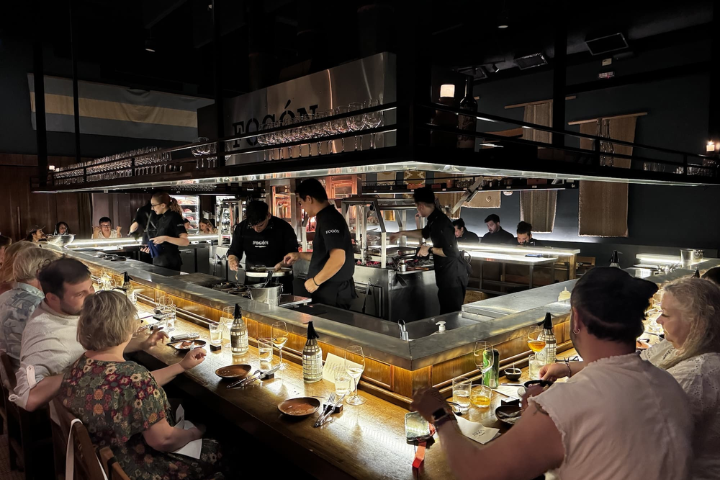
Fogón Asado belongs in this conversation not because it is the most “secret” in the classic puertas cerradas sense, but because it is one of the clearest examples of a dinner in Buenos Aires that turns a deeply Argentine ritual into a more intimate, highly curated experience. The MICHELIN Guide includes it, and the restaurant itself describes the experience as one built around the essence of Argentine asado, cooked right in front of you on a distinctive grill. Their current tasting format is a 9-course menu, and one of the most useful details on the site is that they explicitly refer to a much more exclusive private-space format for just 10 diners.
That is important, because it tells you exactly what kind of exclusivity Fogón is offering. This is not really “hidden supper club” energy. It is an elevated, chef-led, experience-driven interpretation of Argentine fire cooking, and in that sense it can be a very smart recommendation for travelers who want something unmistakably local but still highly curated. The intimacy here comes from format and staging more than from secrecy.
Perso
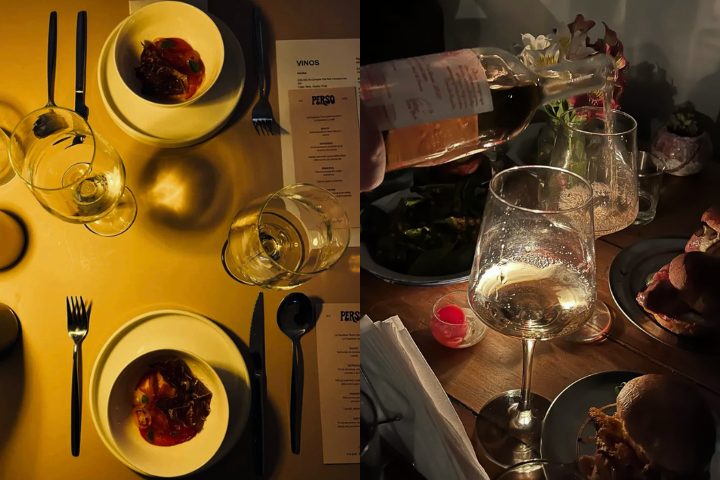
Perso emerges as a masterclass in restraint and quality. Led by Chef Francisco Bareiro, the restaurant strips away the pretension of fine dining to focus on a singular mission: the purity of the product. Here, “signature cuisine” means a concise, ever-changing menu that moves in lockstep with the seasons, transforming local Argentine ingredients into dishes that are technically brilliant yet incredibly approachable.
The experience at Perso is built for discovery. The menu is composed of small to mid-sized plates designed for sharing, allowing guests to journey through a landscape of bold textures.The atmosphere strikes a perfect balance between minimalist chic and warm intimacy. With an open kitchen that invites you to witness the precision of the team and a wine list featuring exceptional low-intervention labels, Perso has quickly become a beacon for the “new luxury.” It is an essential destination for those travelers looking to experience the fresh, technical, and soulful direction of contemporary gastronomy in Buenos Aires.
My honest take
I love puertas cerradas in Buenos Aires when they are chosen properly.
Not because they are trendy. And not because they let someone say they found something hidden. But because, in the right format, they give travelers access to one of the loveliest parts of this city’s dining culture: the feeling that a meal can still be personal, hosted, and a little bit hard to replicate.
And in a world where so much luxury travel is becoming more standardized, that kind of dinner still feels worth protecting, kind of how a boutique hotel completes the itinerary much more than a classic marble floors hotel.
So yes, securing the hardest puertas cerradas reservations in Buenos Aires can absolutely be worth it. But only if the point is not the difficulty, but the evening itself.
FAQs About Puertas Cerradas in Buenos Aires
What does puertas cerradas mean in Buenos Aires?
Puertas cerradas literally means “closed doors.” In Buenos Aires, it usually refers to intimate dining experiences that feel more private, more personal, and harder to access than a conventional restaurant.
Are puertas cerradas always fully private?
No. Some feel very intimate but are still shared with a small number of other guests. Others may offer full buyouts or private formats under certain conditions. It depends entirely on the property and the style of dinner.
Are puertas cerradas better than traditional restaurants in Buenos Aires?
Not automatically. They are simply different. The best ones offer a more personal and atmospheric experience, but they are not always the right fit for every traveler. The key is choosing the one that matches the occasion and the guest.
How far in advance should I reserve puertas cerradas Buenos Aires experiences?
As early as possible. Because these dining experiences tend to have very limited seating, the best ones can fill well in advance, especially on weekends or during high-travel periods.
Which puertas cerradas in Buenos Aires are the most interesting right now?
Some of the names most worth paying attention to are Casa SaltShaker, Treintasillas, 4ta Pared, Muy Nuestra, and Fogón Asado, because each offers a different version of intimacy, exclusivity, or chef-led dining.
Is private dining Buenos Aires easy to arrange?
It depends on what “private” means in the context of the trip. Intimate and exclusive is often easier than truly private. If full privacy is essential, it usually needs to be planned very intentionally.
Are secret supper clubs BA a good idea for honeymoon travelers?
Yes, often very much so. They can be wonderful for honeymooners because they tend to feel more intimate, special, and less conventional than a standard restaurant dinner. The key is choosing one with the right atmosphere and pacing.
Are these among the most exclusive restaurants in Argentina?
Some absolutely are. Not always because they are the most famous, but because they are among the hardest to access and the most personal in format. That often makes them feel more exclusive than louder, more public-facing restaurants.




![Nibepo Aike - [Tailored Argentina]](https://tailoredargentina.com/wp-content/uploads/2026/06/Nibepo-Aike-Tailored-Argentina.png)