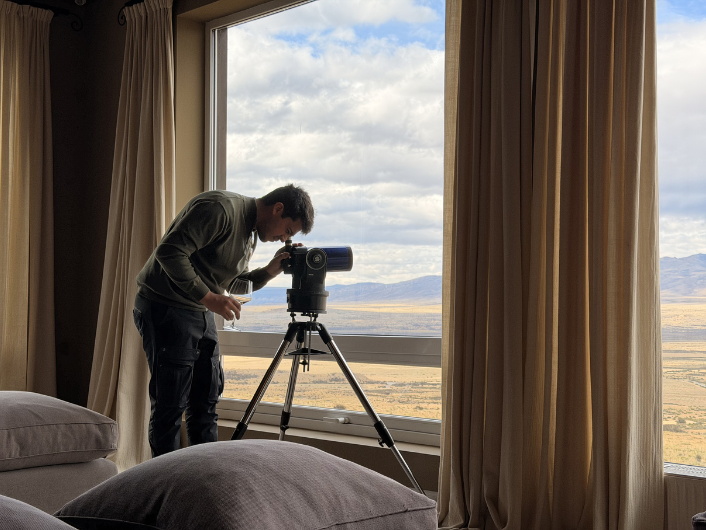
There are few wildlife encounters in South America that feel as electric, or as elusive, as seeing a puma in the wild.
In Patagonia, that possibility is very real.
This vast southern region holds some of the best conditions anywhere in the world for tracking these remarkable cats, especially in landscapes where open terrain, healthy prey populations, and strong conservation efforts have created the right balance for wildlife to thrive. For travelers drawn to nature in its rawest form, a private puma tracking Patagonia experience offers something far more compelling than a standard safari. It is slower, quieter, and more dependent on patience than spectacle. And that is exactly what makes it unforgettable.
For photographers, wildlife lovers, and travelers interested in exclusive conservation travel, puma tracking in Patagonia is not just about seeing a predator. It is about understanding an ecosystem, reading a landscape, and moving through it with purpose.
Why Patagonia Is One of the Best Places in the World to See Pumas
Patagonia has one of the highest concentrations of pumas anywhere in the continent. While these cats roam both Chilean and Argentine Patagonia, the conditions for sightings are not the same across the region.
In Chile, pumas benefit from a much higher level of protection. Hunting is strictly prohibited, and although conflict still exists between large predators and local ranching culture, some outstanding conservation projects have helped turn former hunting grounds into areas where pumas are now protected and increasingly observed. That shift has made a major difference.
Torres del Paine, in particular, has become the most famous destination for puma tracking in Patagonia. There is still no definitive updated census for the park, but estimates commonly range from 50 to 200 pumas across its 227,000 hectares. Those numbers help explain why wildlife-focused expeditions there are so successful.
This is also why the region has gained so much attention among travelers interested in Patagonia photography safari experiences. Few places combine such dramatic scenery with such strong chances of seeing a top predator in the wild.
The Best Places to See Pumas in Patagonia
Without much debate, the best-known place to see pumas in Patagonia is Torres del Paine National Park in Chile.
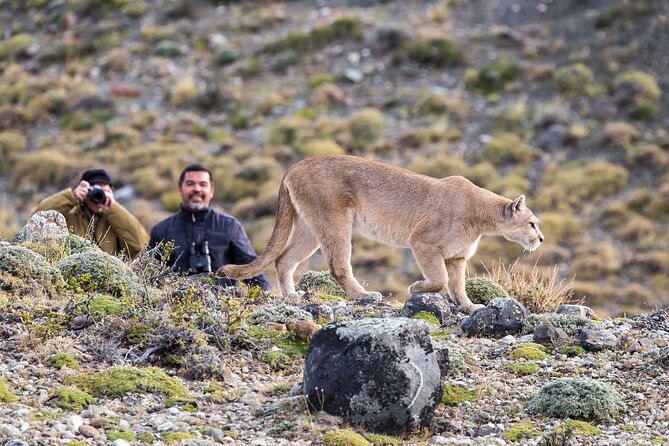
This is where specialized puma tracking tours have become most established, and where the odds are highest when the outing is designed specifically for puma observation. General wildlife excursions may occasionally include a sighting, but dedicated tracking experiences are a different category altogether. They are built around puma behavior, timing, terrain, and the knowledge of expert trackers who understand how to read signs that most travelers would never notice.
In Torres del Paine, these dedicated outings often offer close to an 80% chance of spotting a puma.
That is an extraordinary number for any wild feline encounter.
For travelers who want the best possible odds, this is usually the first place to consider.
On the Argentine side, one of the most promising areas is Parque Patagonia in Santa Cruz. Located in the northwest of the province near the town of Perito Moreno, this park spans more than 50,000 hectares and was created with a strong ecological restoration mission. Its purpose has been to recover degraded ecosystems and reintroduce native balance to the landscape. As part of that process, the local puma population has been recovering as well.
Studies conducted since 2008 in Patagonia National Park in Chile’s Aysén region have shown a density of 3.44 pumas per 10,000 hectares, which speaks to the broader ecological strength of this part of Patagonia and the real possibility of meaningful sightings in protected areas beyond Torres del Paine.
For travelers specifically interested in private and luxury wildlife tours in Argentina, Santa Cruz offers a more off-the-radar and conservation-driven angle. Sightings are never guaranteed, but the experience feels deeply authentic and especially rewarding for those willing to dedicate time to the search.
What a Private Puma Tracking Safari Is Actually Like
A puma tracking safari in Patagonia is not passive.
You do not simply drive into the landscape and wait for nature to perform.
The experience is based on observation, silence, timing, and careful movement through open terrain. Trackers rely heavily on binoculars to scan hillsides, rock formations, and ridgelines where pumas may be resting, watching prey, or moving between sheltered areas. In a place as vast as Patagonia, the ability to detect small signals from far away is everything.
One of the most useful clues comes from guanacos, which are among the puma’s preferred prey. Guanacos are highly alert animals, and their behavior often reveals when a predator is nearby. A solitary sentinel guanaco usually watches the herd from an elevated point, and when something is wrong, its alarm call can alert both the group and the tracker. Experienced guides know how to read those reactions and use them as part of a wider pattern.
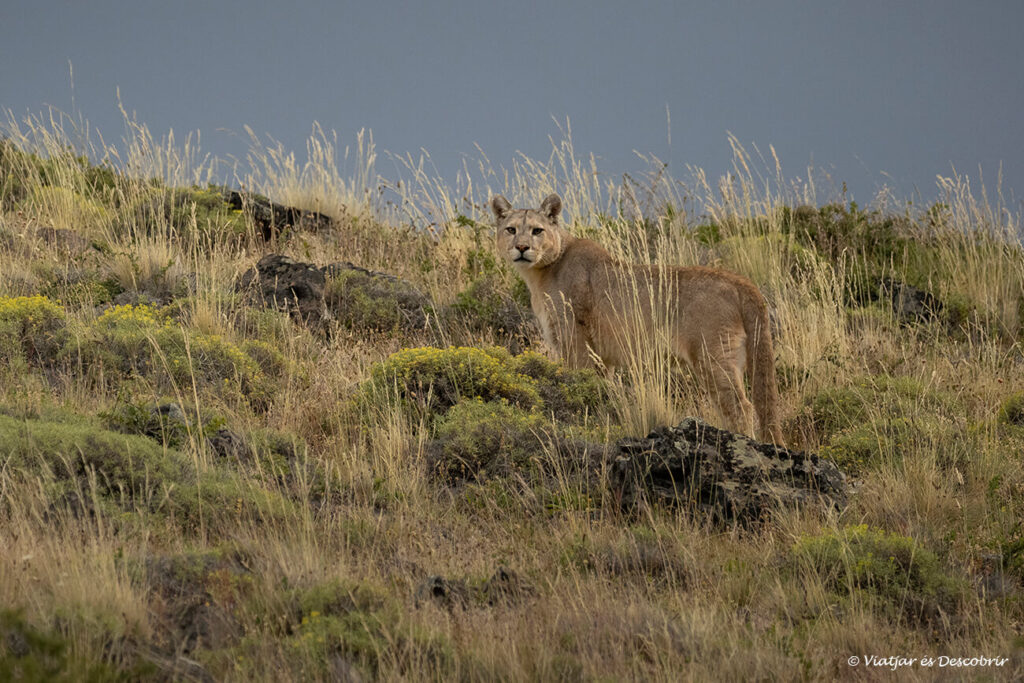
Timing matters too. Pumas are mainly crepuscular, meaning their strongest periods of activity happen around dawn and dusk. That is why early starts are such an important part of successful tracking days. Their coat color, which ranges from silver-gray to reddish tawny, helps them disappear into the landscape with astonishing ease. Even when a puma is in plain sight, it may take an experienced eye to find it.
This is where a professional guide makes all the difference.
Are Pumas Dangerous?
It is a fair question, especially for travelers who are considering a specialized wildlife outing for the first time.
In Patagonia, pumas rarely pose a danger to humans. Attacks are exceptionally uncommon, and they tend to be more frequent in places where human development overlaps more heavily with wildlife habitat. In that sense, puma incidents are more often discussed in parts of the United States than in remote areas of Patagonia, where these animals still live in relatively wild and undisturbed environments.
In national parks and reserves, pumas generally have enough space and natural prey to live without needing to approach humans. Attacks on livestock can occur in some rural zones, which is one reason why puma conservation remains a complex issue in certain ranching regions. But for travelers joining a professional tracking experience, the context is very different.
In Torres del Paine, only one fatal attack has ever been recorded, more than 30 years ago, involving a local fisherman.
Guides also play an essential role in keeping the experience safe. If a sighting happens, they will give very clear instructions. Usually, that means walking behind the guide, staying quiet, maintaining distance, and avoiding sudden movements. This is not only for human safety, but for the puma’s wellbeing too. If our presence disrupts its natural behavior, it can affect its ability to hunt and survive.
When Is the Best Time to See Pumas in Patagonia?
Pumas can be seen throughout the year, but each season offers a different kind of experience.
The high season, from November through February, brings long daylight hours, with up to 17 hours of light in December. This gives trackers more time in the field and can be a very good moment for sightings. However, summer also comes with stronger winds and more visitors, especially in Torres del Paine, where certain areas become significantly busier.
For travelers who want a quieter experience, shoulder season is often even better.
September, October, April, and May are especially attractive months for puma tracking. March can also work well, although it may still feel relatively busy. During these months, the park tends to be calmer, wildlife is often seen closer to main routes, and conditions can be more pleasant for long observation periods. Autumn, particularly around mid-April, is especially beautiful, with softer light, stronger colors, and usually less wind, which makes it ideal for photography.
Winter, from May to August, is generally best left to more adventurous travelers. Temperatures are colder, weather can be harsher, and many hotels close for the season. Still, for the right traveler, winter can offer a very raw and dramatic version of Patagonia.
The Best Place in Argentina for Puma Tracking
If the goal is to focus specifically on Argentina, Parque Patagonia in Santa Cruz stands out as one of the most interesting options.
This protected area has become a strong example of how conservation and ecotourism can work together. Its growing reputation for wildlife tracking is tied directly to ecosystem restoration, and that gives the experience a very different feel from more mainstream safaris. It feels purposeful. Less polished, perhaps, but deeply meaningful.
Some local operators organize exclusive three-day tracking experiences here, sometimes including nighttime outings as well, always with an emphasis on safety, respect for the environment, and responsible wildlife observation. These multi-day expeditions improve the chances of success and allow travelers to experience the region more fully, even when a puma sighting takes time.
And that is an important part of this kind of travel.
There is no real puma tracking experience without patience.
Why a Private Experience Makes Such a Difference
A private safari allows the day to be built around conditions, not around a fixed group schedule. That flexibility matters when you are tracking an animal that moves according to wind, light, prey, and instinct.
It also creates a quieter and more focused experience, which is especially valuable for photographers and for travelers who want something more immersive than a standard wildlife excursion. In our experience, when travelers book outings specifically designed for puma tracking in the right areas, especially in Torres del Paine, they manage to see at least one puma around 90% of the time.
That does not make the encounter feel less wild.
It makes the expertise behind it more evident.
For travelers looking for private puma tracking Patagonia experiences, the real luxury is not just exclusivity. It is access to knowledge, timing, and landscapes that reveal themselves slowly. That is what turns a wildlife outing into something far more memorable.
Because in Patagonia, seeing a puma is never just about the animal itself.
It is about the silence before you find it, the discipline required to wait, and the sudden realization that the landscape was never empty at all.


![Nibepo Aike - [Tailored Argentina]](https://tailoredargentina.com/wp-content/uploads/2026/06/Nibepo-Aike-Tailored-Argentina.png)