If you’re searching for luxury silent retreats Patagonia can genuinely offer, I think it helps to clarify something from the beginning: in Patagonia, silence usually doesn’t come wrapped in a formal program.
It comes through place, through distance, through scale, through choosing the right lodge, in the right landscape, with the right rhythm.
So rather than giving you five generic “wellness retreats,” I’d rather give you the five stays I would actually look at if what you want is deep quiet, real privacy, and a few days where your mind can finally stop bracing against noise.
1. Aguas Arriba Lodge, Lago del Desierto
A true reset within Patagonia wellness travel
If what you want is the version of silence that feels almost total, this is one of the strongest options in Argentine Patagonia.
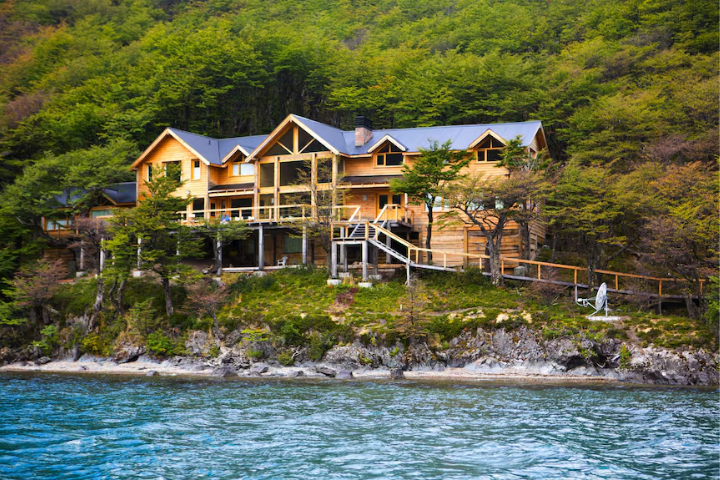
Aguas Arriba is set on the eastern shore of Lago del Desierto, in the Valle del Río de las Vueltas, north of El Chaltén. And that location matters. You do not just drive up and check in. Guests typically arrive by a short boat transfer across the lake, or by a forest trail if they want the full immersion from the start. That already changes the energy of the stay.
This is the kind of place I would choose for someone who wants to disappear into Patagonia in a very literal way. It is remote, quiet, lake-facing, and beautifully stripped of unnecessary movement.
And the way it operates is a very big part of why it works so well. Aguas Arriba is full board, which matters a lot in a place like this, because once you arrive, you can truly let go. You are not thinking about where to eat, what to book next, or how to structure every hour. The property was also built with a strong sustainable logic behind it, which is something I think is worth mentioning, especially because it is the only lodge that managed to establish itself right on Lago del Desierto. That alone already tells you something about the character of the place.
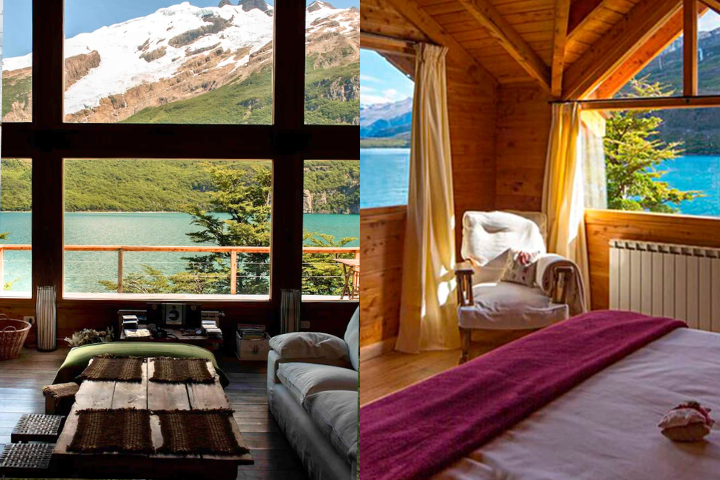
The food also adds a lot to the experience. Every night, there is a different menu, which keeps the stay feeling cared for and personal rather than repetitive. But what I love most about Aguas Arriba is not only the setting. It is the flexibility. And for me, that is a huge part of real relaxation.
Yes, we usually propose beautiful treks for our travelers there, and we do it because we know they will love them. But once guests arrive, they speak directly with the guide, who will give them many different options in the area, and then they can decide based on how they actually feel each day. That makes such a difference. Some days, you want to hike. Some days, you want something gentler. Some days, you just want to stay still. And that is very possible here.
Because beyond the trekking, one of the most special things about Aguas Arriba is being able to simply enjoy the shore of Lago del Desierto without people around, which is something I think matters enormously if the goal is to truly disconnect. There are also daily yoga classes, which fit naturally into the rhythm of the place rather than feeling like a forced wellness add-on. And for travelers who want to add a different kind of quiet outdoor experience, fly fishing is also possible.
With only five rooms, this is one of the rare places in Patagonia that can feel almost like renting a very remote private house near El Chaltén, but with all the comforts of a true luxury stay.
That, to me, is exactly the magic of it.
2. EOLO, El Calafate
One of the most compelling exclusive remote lodges Argentina has for mental space
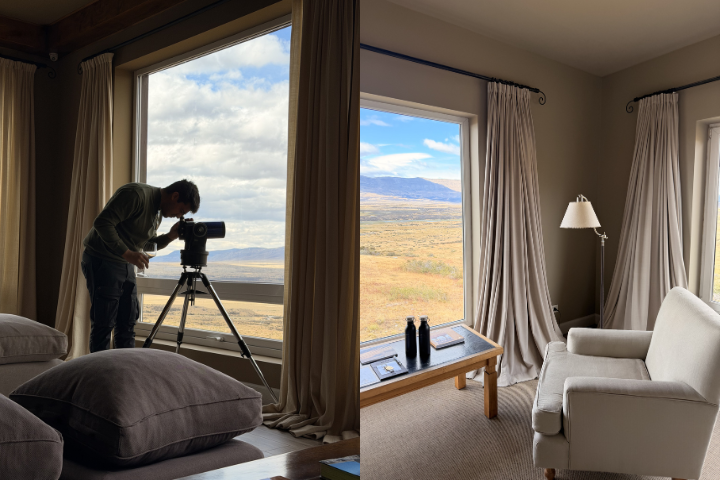
EOLO is the kind of place I recommend when a traveler says they want Patagonia, but not in a rushed, excursion-heavy, “I’m just here to see the glacier” kind of way. It is one of those places that immediately makes sense once you are there.
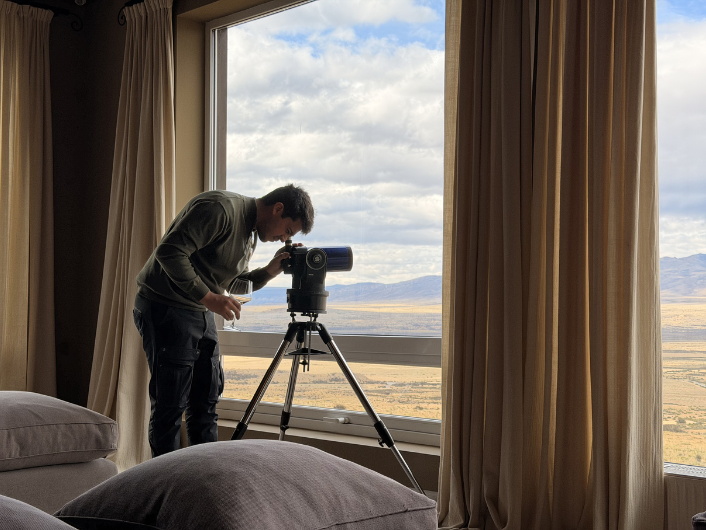
The property sits on 10,000 acres between El Calafate and Los Glaciares National Park, in a part of Patagonia where the steppe feels vast, raw, and almost abstract. And that is exactly why it works so well as a retreat. You are far enough from everything to feel the silence properly, but not so far that the stay becomes logistically difficult.
EOLO also has Two Michelin Keys, which I think is huge. And honestly, in my opinion, even more meaningful than a star, because it speaks to the quality of the entire stay experience, not just the food. And the food is very much part of why this place feels so special too. The chef who is there with guests takes care of all the meals, and the property is full board, which makes a big difference in this kind of retreat setting. Once you arrive, everything starts to feel contained, easy, and beautifully looked after.
The wellness side of the stay is also incredibly strong. EOLO has a truly wonderful spa area. Yes, massages can of course be booked, but even the spa itself, without adding anything extra, already feels like part of the retreat: the hot tub, the wet and dry saunas, the Scottish showers, the relaxation room. It is the kind of place where it becomes very easy to spend a whole afternoon doing very little, and feeling much better for it.
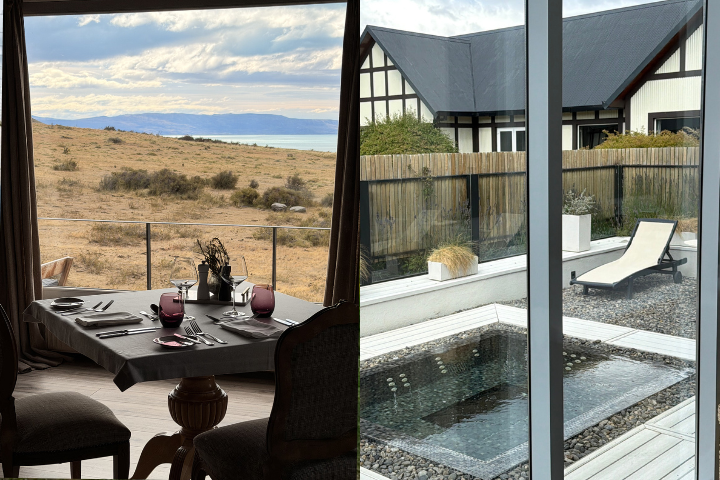
And then there is the wine side, which I also love here. Guests can go down to the wine cellar for a private tasting of Patagonian wines with the sommelier, which is exactly the sort of quiet, elegant experience that fits the property so well.
There are only 17 rooms, and that helps enormously. EOLO never feels crowded. In fact, one of the things I find most special about it is that the property has so many different living and relaxation spaces that each guest can almost claim one as their own. You can spend time with completely open views onto the steppe and feel, very genuinely, like there is no one there but your own company.
And what makes EOLO so memorable for me is how intelligently it was designed from the beginning. The whole property was conceived to dialogue with its surroundings, and it really does. Every room and every relaxation space has extraordinary views, to the point where you almost lose track of where the hotel ends and Patagonia begins.
All the spaces open out toward the landscape. The building itself revolves around one vital element: the central garden, which helps connect the entire property and creates an outdoor area sheltered from the wind. And that matters here, because in this remote part of the Patagonian steppe, the wind is very real.
That is exactly why EOLO works so well as a retreat.
3. Las Balsas, Villa La Angostura
The more refined side of Patagonia wellness travel
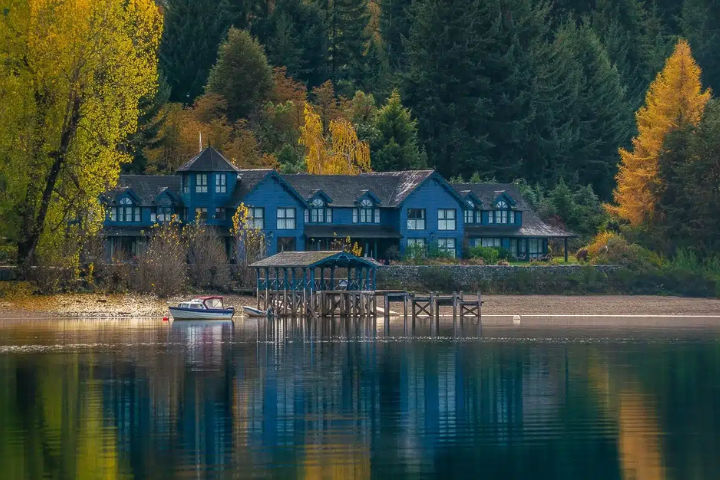
What I love about Las Balsas is that it is not a hotel that later decided to add a wellness angle. It has been thought through from the beginning as a place where slowing down is part of the point. Because some properties have a spa, and some properties are actually designed to hold a retreat. Las Balsas belongs in the second group.
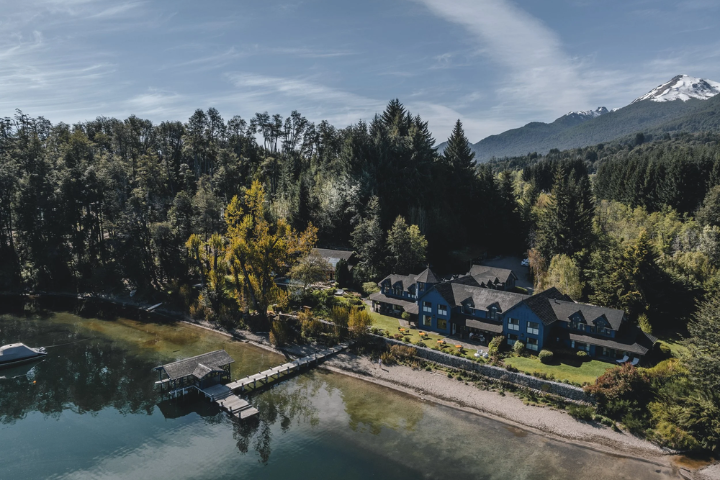
It sits in Villa La Angostura, on the shores of Lake Nahuel Huapi, and it is one of those rare places in Patagonia where the stillness feels elegant rather than empty. The lake gives it softness, the property gives it structure, and the overall rhythm of the stay feels naturally aligned with travelers who want to disconnect properly rather than just “rest a little.”
And yes, another reason we love it: like EOLO, it is also Relais & Châteaux, which we genuinely love and include whenever we can. There is usually a certain depth of hospitality in those properties that goes beyond just comfort. They understand atmosphere and understand how a stay should feel.
Las Balsas is also one of the strongest options I can think of for small incentive retreats focused on wellness. For the right company, this would be a beautiful choice. It is intimate enough to feel private, polished enough to feel elevated, and naturally suited to a slower, more intentional group rhythm.
Another thing that makes it work so well is that it is full board, which takes one of the biggest mental burdens off the traveler immediately. You arrive, and the day begins to hold you. You are not making constant decisions about meals, logistics, or how to fill the time. That matters much more in a retreat setting than people think.
And I especially love it in winter. Patagonia in winter becomes a different version of itself. The region slows down, and many of the more traditional adventure activities take a step back to make room for ski days. Las Balsas works beautifully in that context because you can spend part of the day on the mountain, with transfers in and out available for the slopes, and then return to a property that actually knows how to receive you back into warmth and calm. That rhythm is very hard to beat.
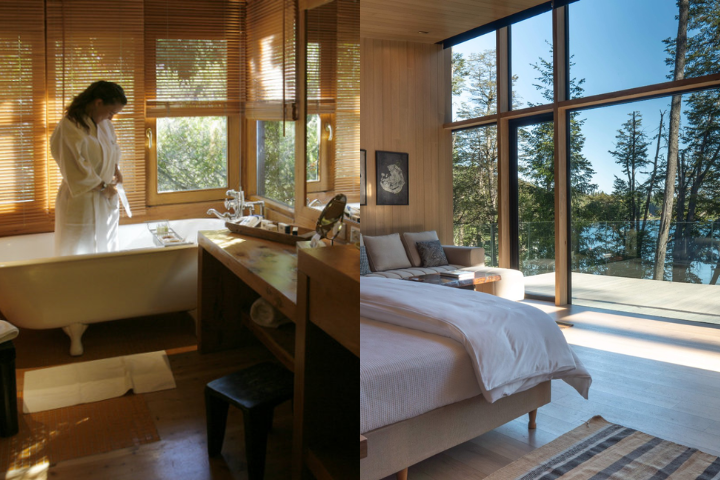
And if we are talking specifically about the wellness side, this is where the property becomes even stronger. Depending on the program chosen, guests can enjoy 50-minute massages included, either one daily per traveler or, in some formats, even more generously integrated into the stay. Yoga classes are also included, which helps give the retreat more shape without making it feel over-programmed. And I like that a lot. Because the experience feels held, but never forced.
Beyond that, there are many other ways to relax here without breaking the mood of the trip: kayaking, sailing, trekking, mountain biking, fly fishing, and horseback riding. So even travelers who do not want a retreat that feels too static still have the option to move, but in ways that remain very aligned with the landscape and with the calmer tone of the stay.
For me, Las Balsas is the retreat I would choose for someone who wants Patagonia to feel restorative, elegant, and beautifully cared for from beginning to end.
4. Explora El Chaltén
A more complete take on private meditation retreats South America
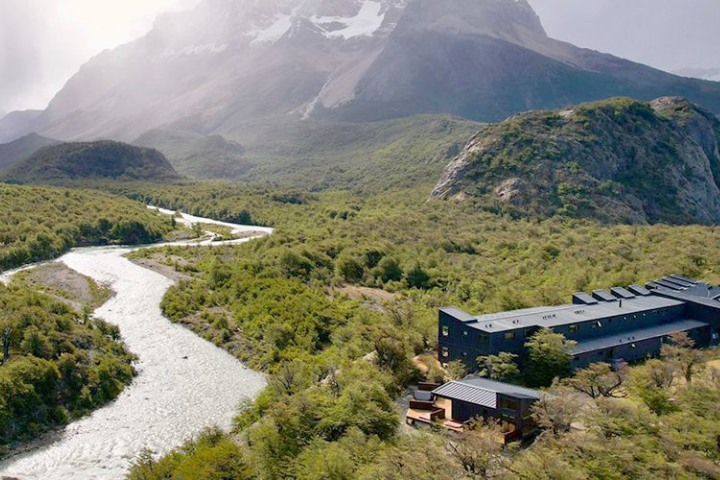
At first glance, El Chaltén might not sound like the obvious setting for a silent retreat. It is usually seen as Patagonia’s trekking capital. A place people go to move, to hike hard, to spend full days out in the mountains, and come back exhausted in the best possible way. So I understand why, at first, it may not sound like the natural home for a more reflective, quieter kind of stay.
And yet, Explora El Chaltén is exactly the kind of property that proves it can be.
What makes it work is that it does not try to compete with the landscape or with El Chaltén’s adventurous identity. It simply softens it. It gives it shape. It turns all that movement into something much more balanced, held, and restorative.
This is one of the strongest all-inclusive stays in the region, and that matters. Your stay includes all explorations, all meals and beverages, spa facilities, National Park entrance fees, and round-trip airport transfers. There are also multilingual guides at your disposal, with more than 30 guided explorations included as part of the experience. That means guests are not arriving to Patagonia and then having to organize it all themselves. They arrive, and the whole experience is already beautifully structured around them.
And that structure is part of what makes the retreat feeling possible here. It is also full board, with authentic Argentine Patagonian cuisine served within the private conservation reserve. That gives the stay a much more complete rhythm, one where you can actually settle into the place rather than constantly managing logistics, meals, timing, or how to fill the day.
For us, another very important part of the story is the property’s commitment to conservation. Whenever traveling to places as environmentally delicate and extraordinary as Los Glaciares National Park, which forms part of one of the world’s most important freshwater reserves, we care deeply about how respectful and committed each accommodation is toward the place where it operates. In the case of Explora El Chaltén, that commitment is very real. They are deeply engaged in preserving the pristine environments their guests come to experience, and that matters enormously to us.
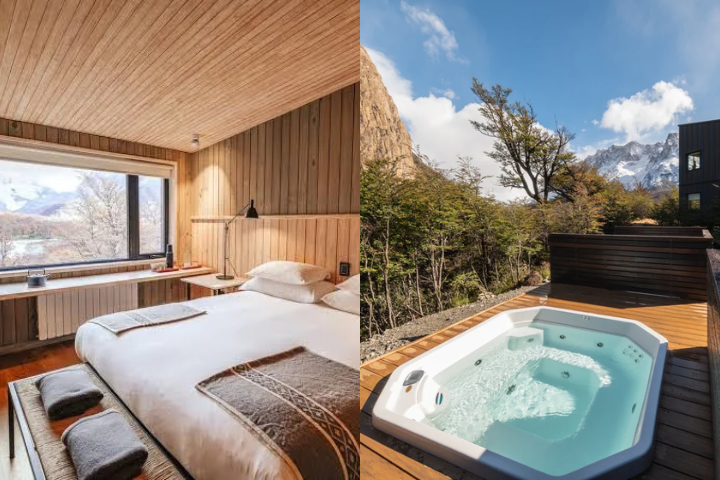
And then comes the part that, in my opinion, really makes Explora stand out in El Chaltén: Recovery. Because that is exactly what this destination often lacks. Most accommodations in El Chaltén are heavily built around the trekking side of Patagonia and leave very little room for what your body and mind actually need after those long days out.
Explora does the opposite. After the hikes, guests have access to five open-air hot tubs, two indoor saunas, a relaxation lounge, an outdoor sitting area, and even a shower with views of the valley. And in a destination like this, that is rare. Very rare.
So no, I would not describe Explora El Chaltén as a retreat in the traditional wellness sense.I would describe it as something more interesting. A place that takes one of Patagonia’s most active destinations and makes space for silence inside it. A place where the day can still be adventurous, but where the stay itself knows how to receive you back into calm.
And that, to me, is exactly why it works so well here.
5. Pristine El Calafate Luxury Camp
A more contemporary take on exclusive remote lodges Argentina
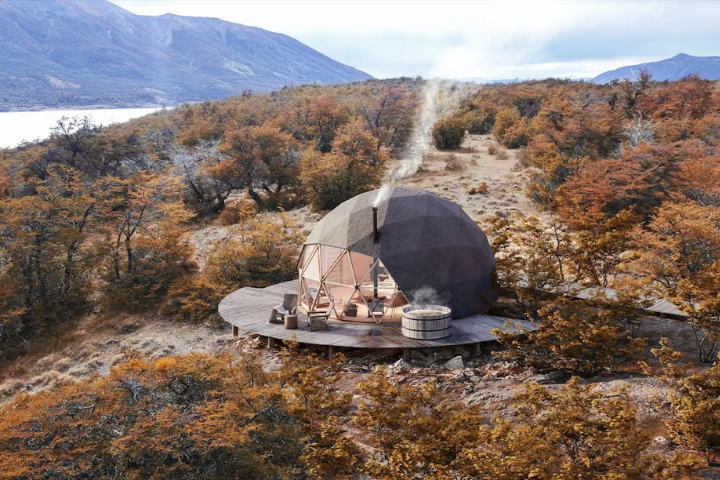
Pristine El Calafate Luxury Camp is a very different kind of retreat from the others on this list, and that is exactly why I think it deserves to be here.
It is located within Estancia Dos Lagos, in the heart of Patagonia, and combines luxury, sustainability, and one of the most privileged landscapes in the region. Their sustainable domes offer something that, honestly, is almost impossible to find elsewhere in El Calafate: direct views of the Perito Moreno Glacier and the Patagonian steppe. In fact, it is the only accommodation in the entire El Calafate area with direct glacier views, which makes it incredibly special.
Of course, that proximity to the glaciers also means it sits farther from town. Guests should keep in mind that it is located approximately 1 hour and 30 minutes by car from El Calafate airport. But to me, that distance is not a downside. It is part of the point. If you want to feel closer to the glacier landscape than to the town itself, this is exactly the kind of stay that gives you that.
Pristine is also all-inclusive, and that matters enormously in a place like this. The stay includes all meals, with a more elevated author-style culinary approach: breakfast, lunch, afternoon tea, and dinner, all prepared with regional ingredients, plus drinks and local wines during meals. Lunch is included for stays of two nights or more, which is usually the format that makes the most sense here anyway.
And the included experiences add a lot of richness to the stay. Guests can enjoy Argentine cooking classes, a yerba mate tasting, mountain bike rides, different guided trekking circuits, horseback riding, and even a navigation to the Perito Moreno Glacier with time on the walkways. So while the retreat is quiet in tone, it is not empty. It simply gives guests a more intimate and more exclusive way to experience this part of Patagonia.
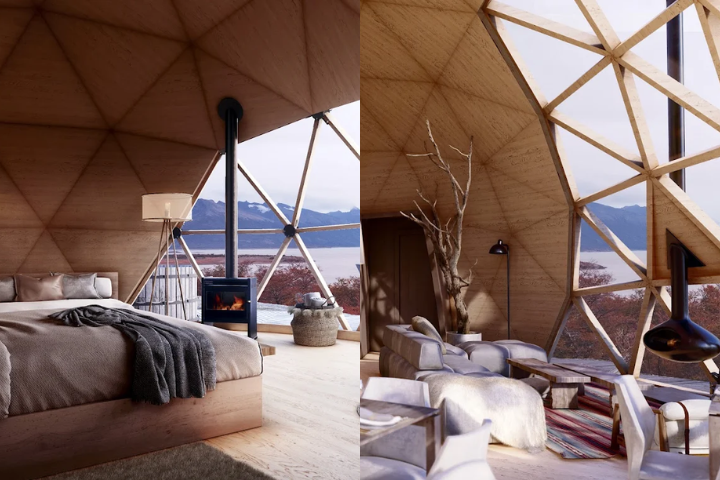
As for relaxation, yes, it is true that Pristine does not have a spa. But I do not think that weakens it as a retreat. It just makes it a different kind of one. Here, the retreat is much more about being with yourself. About silence. About all-in comfort in an extraordinary setting. About stepping away from everything and being left with incredible views, stillness, and a very private rhythm. And in that sense, it works beautifully.
Each premium suite is designed with comfort in mind, and the private deck becomes a huge part of the experience. The suites offer 39 m², accommodate up to three guests, and include a small sitting area, wood-burning stove, heater, minibar, private bathroom with shower and amenities, and most importantly, a private deck with a heated outdoor hot tub.
And that hot tub, to me, is a big part of why the property works so well in this article. Because even without a spa, that private heated tub facing one of the most extraordinary landscapes in Patagonia creates exactly the kind of pause many travelers are looking for. You come back from the day, sink into the warm water, and simply contemplate. No one around. No town noise. No schedule left to manage. Just the glacier, the steppe, and the silence.
That is not the classic wellness model.
But it is absolutely a form of retreat.
My honest take on private meditation retreats South America and Patagonia
If you are specifically looking for private meditation retreats South America can offer, Patagonia is probably not the place I would choose for something heavily programmatic, overly spiritual, or built around a very branded version of stillness.
And honestly, I think that is part of its strength.
Patagonia works best when silence comes through the landscape itself. Through distance, water, open land, weather, and the feeling that the right property can lower the volume of the whole trip without trying too hard. That is why these five work for me. They are not all traditional retreat centers. They are places where silence actually has room to happen.
Which one I’d choose depending on the traveler
If what you want is the deepest sense of isolation, I would start with Aguas Arriba. It is the one that feels most like stepping away from the world entirely.
If you are drawn to open land, steppe views, and a beautifully run lodge that gives you both stillness and structure, I would look at EOLO.
If your idea of retreat includes a stronger wellness component, softer lake energy, and a stay that feels naturally designed for slowing down, Las Balsas is probably the best fit.
If what you want is a more held, all-inclusive, conservation-led version of stillness in a destination that is usually seen as highly active, Explora El Chaltén is a very strong answer.
And if your idea of retreat is more contemporary, more private, and more about silence, contemplation, and extraordinary glacier views than about a traditional spa setup, I would absolutely keep Pristine El Calafate on the list.
The important thing is choosing the one that gives you the kind of quiet you actually need.
Choosing the right silent retreat in Patagonia is not really about choosing the most expensive lodge or the one with the most wellness language around it. It is about understanding what kind of quiet you are actually looking for.
Some travelers need a lake, some need total remoteness, some need a softer spa rhythm, and some need a place so wild that it resets them almost by force. That is exactly where we come in.
At Tailored Argentina, we help travelers filter through the noise, choose the right property for the right reasons, and build Patagonia stays that feel not just beautiful, but deeply well judged from the inside.
Frequently Asked Questions About Luxury Silent Retreats in Patagonia
Are there true luxury silent retreats in Patagonia?
Yes, but usually not in the classic “retreat center” sense. In Patagonia, silence tends to come more through the lodge, the landscape, and the remoteness of the experience than through a formal program. That is actually part of what makes it so powerful here.
What is the best area in Patagonia for a silent retreat?
It depends on the kind of silence you want. Northern Patagonia, with its lakes and forests, usually feels softer and more restorative. Southern Patagonia often feels bigger, emptier, and more dramatic. And the Atlantic coast offers a completely different kind of stillness, wilder and less expected.
Is Patagonia wellness travel always spa-focused?
Not at all. Some stays do have strong spa components, but the best Patagonia wellness travel is often more about stillness, nature, clean air, slower rhythm, and being in a place that naturally lowers your internal volume.
Are exclusive remote lodges Argentina a good fit for solo travelers?
Yes, very much so. In fact, many solo travelers do especially well in this kind of setting, because the right remote lodge removes a lot of noise and decision fatigue. Patagonia can be incredibly supportive for travelers who want to be alone without feeling exposed or disconnected.
How many nights should a silent retreat in Patagonia be?
In my opinion, at least three nights, and ideally four or five. Anything shorter can feel a little frustrating, because Patagonia takes a moment to get into your system. The whole point is not just to arrive, but to settle.
Are private meditation retreats South America better in Patagonia than in tropical destinations?
They can be, depending on the traveler. Tropical destinations often feel lush, warm, and more sensorial. Patagonia feels quieter, barer, and more elemental. For some people, that makes it much easier to actually slow down.
Which silent retreat in Patagonia is best for couples?
If the priority is romance and lake-side calm, Las Balsas is a very strong option. If the priority is deeper seclusion and a stronger feeling of disconnection, Aguas Arriba can be incredibly special for couples.
Which silent retreat in Patagonia is best for travelers who still want some structure?
EOLO is a very good answer for that. It offers quiet and remoteness, but with a polished lodge rhythm and access to guided experiences that can be kept soft and private rather than highly programmed.
![Nibepo Aike - [Tailored Argentina]](https://tailoredargentina.com/wp-content/uploads/2026/06/Nibepo-Aike-Tailored-Argentina.png)