Buenos Aires is often called “The Paris of South America,” but the phrase only becomes meaningful when you understand what you are looking at. A private architecture tour in Buenos Aires experience is not simply about admiring beautiful façades or photographing grand avenues. It is about reading the city as a living archive: aristocratic ambition, European influence, immigration, political drama, tango, social movements, literary cafés, presidential balconies, cemetery sculptures, and the quiet elegance of neighborhoods that still feel suspended between continents.
For first-time visitors, Buenos Aires can feel immediately familiar and strangely mysterious. One corner resembles Paris, another Madrid, another Naples, another something entirely porteño. Its architecture is not a single style, but a layered conversation. French academicism, Italianate palaces, Art Nouveau curves, Art Deco geometry, colonial remains, Brutalist public buildings, Belle Époque residences, and contemporary glass towers all coexist in a city that has never been shy about reinvention.
That is precisely what makes a private historical tour so powerful. Buenos Aires is not a city to “cover.” It is a city to decode.

Why Buenos Aires Became the “Paris of South America”
The nickname was not accidental. In the late 19th and early 20th centuries, Argentina was one of the wealthiest countries in the world, and Buenos Aires became the grand stage where that prosperity was displayed. The local elite looked to Europe, especially France, for cultural legitimacy. They imported architects, materials, ideas, furniture, urban planning concepts, and a certain appetite for theatrical elegance.
This was the era of palaces, grand boulevards, ceremonial staircases, mansard roofs, marble interiors, wrought iron balconies, and private residences designed to look less like homes and more like diplomatic declarations. Recoleta, Retiro, and parts of Palermo Chico still carry this aristocratic imprint. Walking through these neighborhoods, you can sense the ambition of a young nation trying to announce itself to the world in stone, bronze, and chandeliers.
But Buenos Aires is more interesting than a Paris imitation. Its beauty comes from tension. European aesthetics arrived here and collided with the Río de la Plata, mass immigration, political upheaval, tango culture, football devotion, Peronism, economic cycles, and a deeply local way of living in public space. The result is not Paris copied southward. It is Buenos Aires: elegant, dramatic, intelligent, wounded, seductive, contradictory.
A Private City Tour Designed Around Context, Not Checklists
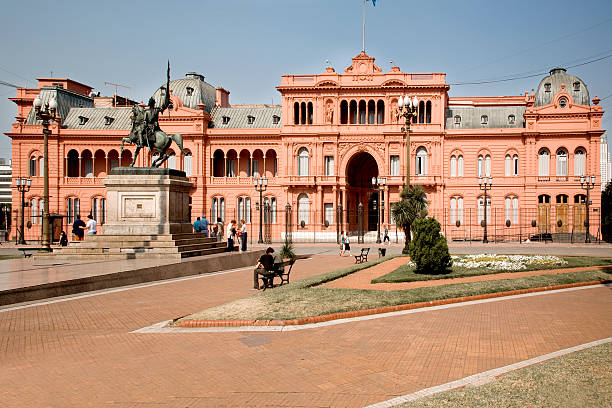
A well-crafted private tour of Buenos Aires usually begins where the country’s political memory is most concentrated: Plaza de Mayo. This is not just a square. It is Argentina’s civic theater. The May Revolution of 1810, presidential speeches, social demonstrations, national celebrations, and collective grief have all passed through this space. The Casa Rosada, with its famous balcony, gives the square its symbolic weight, while the surrounding buildings reveal different chapters of institutional power.
From there, the experience can move through several essential neighborhoods, each one revealing a different layer of the city. La Boca introduces immigration, conventillos, tango mythology, working-class identity, and the emotional religion of football. San Telmo brings cobblestone streets, antique markets, colonial traces, old cafés, and a bohemian pulse. Puerto Madero shows the city’s modern reinvention, with renovated docks, polished towers, and a very different relationship to the river.
The route often continues toward Congreso, Retiro, Avenida 9 de Julio, Teatro Colón, Recoleta, Barrio Parque, and Palermo. Each stop is less about “seeing a monument” and more about understanding why that monument matters. Why does the Congress building look the way it does? Why is Teatro Colón considered one of the great opera houses of the world? Why did the aristocracy choose Recoleta? Why does Buenos Aires have such a complex relationship with its own past?
With the right guide, the city becomes legible. A façade stops being decoration. A plaza stops being scenery. Even a street name begins to whisper.
Recoleta and the Architecture of Aristocracy
No neighborhood captures the aristocratic side of Buenos Aires quite like Recoleta. This is where the city’s Belle Époque fantasy feels most intact. Its avenues, mansions, embassies, cultural institutions, cafés, and parks create an atmosphere of cultivated grandeur. Recoleta is elegant, yes, but it is not ornamental. It tells the story of families who shaped Argentina’s political, economic, and social life.
The Recoleta Cemetery is one of the most extraordinary places in the city. It is often visited because Eva Perón is buried there, but its importance goes far beyond one tomb. The cemetery is an open-air museum of sculpture, symbolism, family power, and national memory. Mausoleums in marble, granite, bronze, and stained glass reveal how Argentina’s elite wanted to be remembered. Some tombs resemble miniature chapels. Others feel like private monuments to dynastic ambition.
Nearby, the National Museum of Fine Arts, Plaza Francia, the Recoleta Cultural Center, and elegant residential streets create a dense cultural landscape. For travelers interested in architecture, Recoleta is not just a stop. It is one of the city’s great keys.
Exclusive Walking Tours Recoleta: The Details Most Visitors Miss
The difference between a standard visit and exclusive walking tours Recoleta lies in the level of interpretation. Anyone can walk past a French-style mansion and say it is beautiful. A specialist guide explains why the roofline matters, which families lived there, what materials were imported, how the city’s elite performed status, and how urban planning reflected Argentina’s national ambitions.
Recoleta also rewards slow looking. The curve of a balcony, the ironwork on a gate, the sculptural language of a mausoleum, the placement of a plaza, the relationship between a palace and an avenue: these are not accidental. They are part of a larger grammar of power and taste.
For luxury travelers, this kind of tour is especially valuable because it replaces generic sightseeing with private access to context. The experience feels closer to being walked through a city by a historian, architect, and cultural insider at once.
From Teatro Colón to Barrio Parque: Grandeur in Different Forms
Teatro Colón is one of Buenos Aires’ great architectural treasures. Its acoustics are legendary, but its deeper significance lies in what it represented: a nation with the confidence to build a world-class opera house and place itself in conversation with Europe’s cultural capitals. Its interiors, materials, and ceremonial spaces still speak the language of grandeur.
Retiro and Barrio Parque offer another version of elegance. Retiro combines stately buildings, diplomatic residences, and one of the city’s great train stations, while Barrio Parque feels more discreet, leafy, and residential. Here, embassies and private mansions sit behind gardens and gates. It is luxury without noise, the Buenos Aires equivalent of a lowered voice in a silk-lined room.
Palermo, by contrast, shows how the city continues to evolve. Palermo Chico preserves an aristocratic residential character, while Palermo Soho and Palermo Hollywood introduce design, restaurants, boutiques, cafés, nightlife, and contemporary creative culture. This contrast is essential. Buenos Aires is not frozen in history. It is always editing itself.
Evita Private Tour BA: Following a More Personal Thread
One of the advantages of a private tour is that it can adapt to each traveler’s interests. Some guests want architecture. Others want politics, art, Jewish heritage, literature, tango, football, food, or aristocratic history. And sometimes, a traveler asks for something very specific, such as an Evita private tour BA experience.
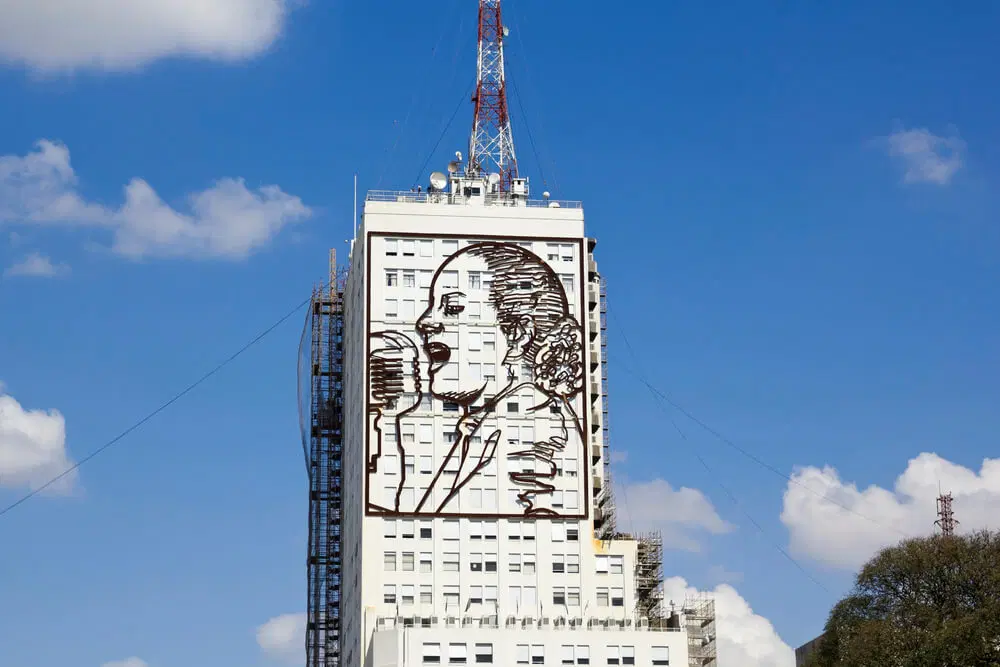
Eva Perón is one of Argentina’s most iconic and controversial figures, and her story can be traced through key locations in Buenos Aires. A tailored Evita-focused route may include Luna Park, where Eva Duarte met Juan Domingo Perón during a charity event in 1944; the Evita Museum in Palermo, which offers a more intimate view of her life, wardrobe, documents, and political symbolism; Casa Rosada and Plaza de Mayo, where her public voice became part of Argentina’s national mythology; and the Ministry of Public Works on Avenida 9 de Julio, marked by her monumental image.
Other meaningful stops can include Congress, connected to her advocacy for women’s suffrage; the CGT building, tied to her relationship with the labor movement; the Buenos Aires City Legislature, where her body lay in state after her death in 1952; and Recoleta Cemetery, where the Duarte family tomb remains one of the most visited sites in the city. The point is not to turn the tour into a biography lesson, but to reveal how one woman’s life became inseparable from the architecture, politics, and emotional memory of Buenos Aires.
Luxury Historian Guide Argentina: Why the Guide Matters
A city like Buenos Aires deserves more than memorized dates. A luxury historian guide Argentina experience should feel intelligent, flexible, polished, and alive. The guide must know when to go deep and when to let the city breathe. They should be able to discuss architecture, politics, immigration, class, urban development, gastronomy, and everyday porteño life without turning the tour into a lecture.
The best private guides also understand pacing. Buenos Aires can be intense. A six-hour tour should not feel like a race through monuments. It should include strategic pauses, perhaps a coffee in a historic café, a quick local bite, a moment inside a bookstore, a view from a quiet plaza, or a detour based on the traveler’s curiosity.
This is where private travel design matters. A couple interested in aristocratic mansions should not have the same route as a family fascinated by Evita, or a solo traveler obsessed with Art Nouveau, or a group wanting the full city panorama from La Boca to Palermo. Buenos Aires opens differently depending on the questions you bring to it.
A City Tour That Connects Architecture, Politics, and Daily Life
What makes Buenos Aires extraordinary is that its history is not sealed behind museum glass. It is lived daily. Locals still gather in historic cafés. Protests still move through symbolic squares. Tango still belongs to the city’s emotional vocabulary. Pizza, ice cream, mate, football, bookstores, and late dinners are not side details. They are part of the same cultural map.
A strong private tour connects the monumental with the intimate. It can move from the Casa Rosada to a neighborhood café, from aristocratic Recoleta to working-class La Boca, from the tomb of Evita to the modern towers of Puerto Madero, from the grandeur of Teatro Colón to the design shops of Palermo. That range is the real Buenos Aires.
The city’s architecture may first seduce the eye, but its stories are what stay with you.
Frequently Asked Questions
What is included in a private architecture tour Buenos Aires experience?
A private architecture tour usually includes a professional guide, private transportation, hotel pick-up and drop-off, and a customized route through key neighborhoods such as Plaza de Mayo, Recoleta, Retiro, San Telmo, La Boca, Palermo, and Barrio Parque. The focus can be adjusted depending on your interests, from Belle Époque palaces to political history, Evita, tango, immigration, or contemporary design.
Is Recoleta the best neighborhood for architecture lovers?
Recoleta is one of the best neighborhoods for architecture lovers because it concentrates many of Buenos Aires’ most elegant European-style buildings, cultural institutions, parks, embassies, and historic residences. It is also home to Recoleta Cemetery, one of the most important architectural and historical sites in the city.
Can the tour include an Evita private tour BA focus?
Yes. For travelers interested in Eva Perón, the tour can include places connected to her life and legacy, such as Luna Park, the Evita Museum, Casa Rosada, Plaza de Mayo, Congress, the Ministry of Public Works, the CGT building, the Buenos Aires City Legislature, and Recoleta Cemetery.
How long should a private historical tour of Buenos Aires be?
A well-paced private city tour usually takes around 4 to 6 hours. For travelers who want a deeper architectural or political focus, a full-day experience can be ideal, especially if it includes Recoleta, La Boca, San Telmo, Plaza de Mayo, Teatro Colón, Palermo, and selected private stops.
Is this tour suitable for first-time visitors to Buenos Aires?
Absolutely. It is one of the best ways to understand the city on a first visit because it gives context to everything you will see later: neighborhoods, food, politics, architecture, tango, and local customs. Instead of simply recognizing landmarks, you begin to understand the city’s personality.
Why book with a luxury historian guide Argentina instead of doing a standard group tour?
A private historian-led experience offers depth, flexibility, and personalization. You can move at your own pace, ask more specific questions, avoid generic routes, and focus on the themes that matter most to you. In a city as layered as Buenos Aires, that difference is everything.

![Nibepo Aike - [Tailored Argentina]](https://tailoredargentina.com/wp-content/uploads/2026/06/Nibepo-Aike-Tailored-Argentina.png)